Valve Maintenance
Valve maintenance is a critical aspect of managing industrial systems that, when performed efficiently, can increase the life span and performance of the valves, leading to significant time and cost savings. This maintenance plays an integral role in preventing system shutdown, production loss, and unnecessary costs associated with repairing or replacing damaged valves. This article discusses the importance of valve maintenance, preventive measures, maintenance techniques, and factors to consider during maintenance procedures.
Importance
Valve maintenance is an integral part of general system management, especially in industrial setups such as water and wastewater treatment plants, petrochemical plants, refineries, power plants, and feed mills among others. Valves control fluid flow, maintain pressure and temperature, and ensure safe operation of equipment. Inefficient or broken valves can lead to operational hitches, environmental concerns, and safety hazards. Regular valve maintenance helps prevent these potential issues[^1^].
Preventive Measures
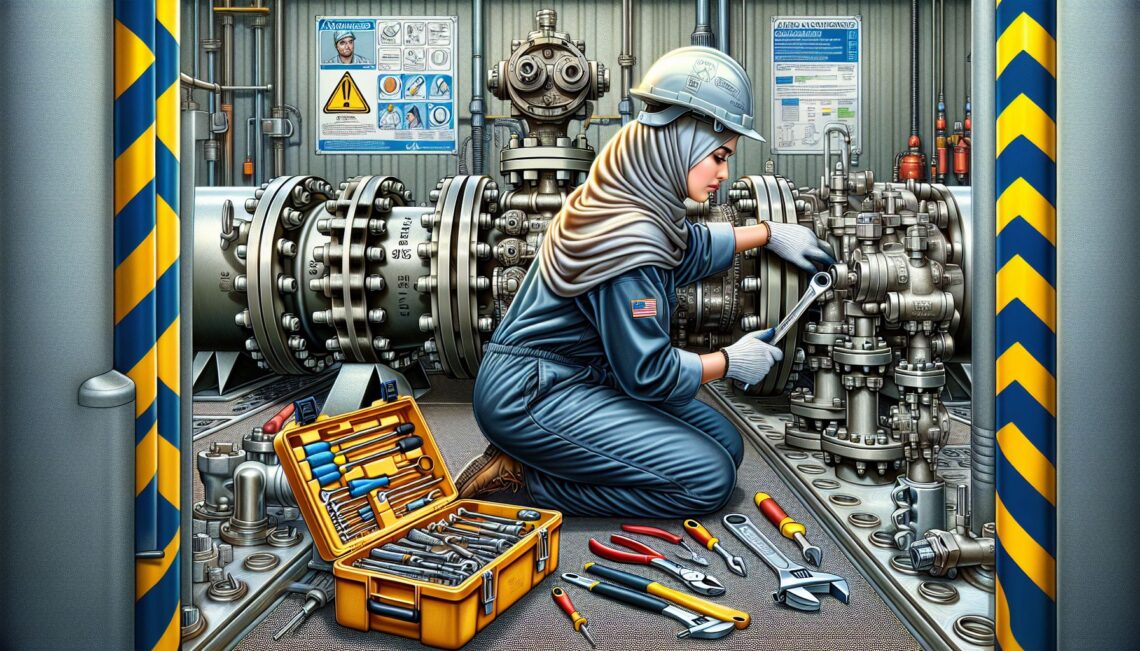
Preventive maintenance offers the best defense against system shutdowns and costly repairs. It includes regular inspections, lubrication, and timely replacement of worn-out parts. Inspecting valves regularly enables early detection of abnormalities such as leaks, corrosion, or wear, providing the opportunity for prompt corrective action. Regular lubrication ensures the moving parts operate smoothly, reduces wear, and extends valve life. Replacing worn-out parts on schedule prevents them from breaking down and causing more extensive damage[^2^].
Maintenance Techniques
Several maintenance techniques are suitable for different types of valves, with the choice depending on the valve’s specifications, operation environment, and nature of the fluid it handles. Some common techniques include valve packing, valve lapping and grinding, leak sealing, and valve retrofitting. Valve packing involves encasing the valve stem to prevent leaks. Valve lapping and grinding involve smoothing the valve’s surfaces to improve sealing. Leak sealing involves sealing leaks in the valve body or piping. Valve retrofitting involves upgrading the valve with new technologies to improve its performance[^3^].
Consideration Factors
Valve maintenance is a complex process that involves carefully balancing various factors. The most critical of these factors include the valve’s function in the system, its location and accessibility, the nature of the fluid being handled, the ambient conditions, and the valve’s materials of construction. Understanding these factors helps in planning the maintenance schedule, choosing the correct maintenance technique, and selecting the right replacement parts([^4^]).
In conclusion, valve maintenance is a vital undertaking in the management of industrial systems. Regular inspections, timely lubrication, and part replacement all contribute to efficient valve performance and increased life span. By understanding the valve’s function, location, and the nature of the fluid it handles, maintenance can be effectively performed to ensure the overall safety and efficiency of the system. Therefore, formulation of a comprehensive valve maintenance strategy and schedule is a worthy investment.
[^1^]: Jones, D. (2014). The Importance of Industrial Valve Maintenance. Valve Magazine. Retrieved from http://www.valvemagazine.com/index.php/news/manufacturing-a-economy/5594-the-importance-of-industrial-valve-maintenance
[^2^]: Valve Maintenance – Preventive Maintenance (n.d.). Valve World. Retrieved from http://www.valveworldexpo.com/cgi-bin/md_valve/lib/pub/tt.cgi/Valve_Maintenance_-_Preventive_Maintenance.html
[^3^]: Mation, D. (2015) Different Techniques for Valve Maintenance. Flow Control Network. Retrieved from https://www.flowcontrolnetwork.com/different-techniques-for-valve-maintenance-article/
[^4^]: Dossett, D. (2014). Tips for Successful Valve Selection and Maintenance. Processing Magazine. Retrieved from https://www.processingmagazine.com/valve-selection-maintenance/