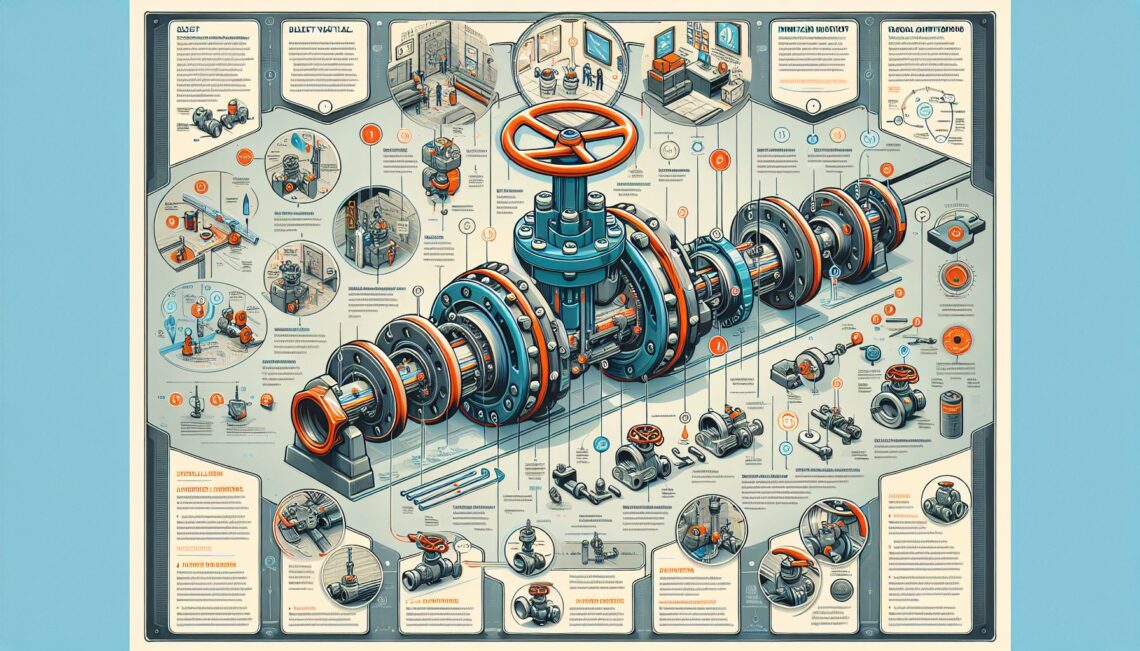
Butterfly Valves: A Comprehensive Guide to Selecting, Installing, and Maintaining
Butterfly valves are an integral component of many different industrial processes. They are used across a multitude of industries, from wastewater treatment to oil and gas applications. This article will explore butterfly valves in detail, with discussions on how they work, the different types available, as well as guidelines for selection, installation, and maintenance.
What Are Butterfly Valves?
Butterfly valves are a type of flow control device, designed to regulate or isolate the flow of a fluid. They get their name from the disc that is centrally mounted on a rotating shaft, resembling a butterfly with its wings open when in the open position
In the complex ecosystem of wastewater treatment plants, efficient flow control is paramount to ensuring effective treatment processes and environmental protection. Among the various tools and components employed in these facilities, butterfly valves stand out as crucial elements in managing the flow of water, chemicals, and gases. This article delves into the world of butterfly valves, exploring their design, functionality, and specific applications within wastewater treatment plants, while also touching on their broader use across industries.
Understanding Butterfly Valves:
Butterfly valves are quarter-turn rotational motion valves used to start, stop, or regulate flow. Their name derives from the wing-like rotating disc that forms the closure mechanism. When fully open, the disc rotates to a position parallel to the flow, offering minimal resistance. When closed, the disc rotates perpendicular to the flow, creating a seal against a seat in the valve body.
Design and Components:
1. Body: Typically cylindrical, housing the internal components.
2. Disc: The primary closure element, rotating to control flow.
3. Stem: Connects the disc to the actuator, transmitting rotational force.
4. Seat: Provides a seal when the valve is closed.
5. Actuator: Mechanism for opening and closing the valve (manual, electric, pneumatic, or hydraulic).
Types of Butterfly Valves:
1. Concentric (Zero Offset): The stem axis aligns with the disc axis.
2. Single Offset (Eccentric): The stem is slightly offset from the disc center.
3. Double Offset: Two offsets provide better sealing and wear resistance.
4. Triple Offset: Three offsets create a cone-shaped closure for superior sealing.
Materials:
Common materials include ductile iron, cast iron, stainless steel, PVC, and various alloys. The choice depends on factors like corrosion resistance, pressure ratings, and compatibility with the media being controlled.
Butterfly Valves in Wastewater Treatment:
Wastewater treatment plants utilize butterfly valves extensively due to their versatility, reliability, and cost-effectiveness. Here are key applications:
1. Influent Control:
At the plant inlet, large butterfly valves regulate the incoming wastewater flow. These valves can quickly isolate the plant if necessary, such as during flood events or when harmful substances are detected in the influent.
2. Aeration Basin Management:
In biological treatment processes, butterfly valves control the air supply to aeration basins. By regulating airflow, operators can optimize dissolved oxygen levels for microbial activity, enhancing treatment efficiency and energy conservation.
3. Clarifier Flow Control:
Butterfly valves manage the flow of water into and out of clarifiers, where solid particles settle out of the treated water. Precise flow control is crucial for optimal settling and effluent quality.
4. Disinfection Systems:
In chlorine disinfection systems, butterfly valves control the flow of chlorine gas or sodium hypochlorite solution. Their quick-acting nature allows for rapid shut-off in case of leaks, enhancing safety.
5. Sludge Management:
Valves regulate the flow of sludge between various treatment stages, such as thickening, digestion, and dewatering. The ability to handle viscous fluids makes butterfly valves suitable for this application.
6. Effluent Control:
At the plant outlet, butterfly valves manage the release of treated water, ensuring compliance with discharge permits and allowing for flow adjustments based on receiving water conditions.
7. Odor Control Systems:
Butterfly valves play a role in directing foul air to odor control units, helping maintain air quality within the plant and in surrounding areas.
Advantages of Butterfly Valves in Wastewater Treatment:
1. Space Efficiency: Compact design allows for installation in tight spaces.
2. Low Pressure Drop: When fully open, they offer minimal resistance to flow.
3. Quick Operation: Quarter-turn design enables rapid opening and closing.
4. Cost-Effective: Generally less expensive than other valve types for large diameters.
5. Versatility: Suitable for liquids, gases, and slurries.
6. Low Maintenance: Simple design with fewer parts compared to other valve types.
7. Weight Savings: Lighter than equivalent gate or globe valves, reducing structural support requirements.
Challenges and Considerations:
1. Cavitation: Can occur in high-pressure drop scenarios, potentially damaging the valve.
2. Throttling Limitations: Not ideal for fine control in partially open positions.
3. Sealing: Achieving tight shut-off can be challenging, especially with wear over time.
4. Disc Protrusion: The disc extends into the pipe when open, which can interfere with pigging operations.
5. Corrosion: Proper material selection is crucial to prevent corrosion in harsh wastewater environments.
Innovations and Trends:
1. Smart Valves: Integration of sensors and actuators for remote monitoring and control.
2. Advanced Materials: Development of corrosion-resistant alloys and coatings for extended service life.
3. Energy Recovery: Utilizing pressure drop across valves for small-scale hydropower generation.
4. 3D Printing: Exploration of additive manufacturing for custom valve components.
5. Predictive Maintenance: Use of IoT and AI for anticipating valve failures and optimizing maintenance schedules.
Installation and Maintenance:
Proper installation is crucial for optimal performance. Key considerations include:
1. Alignment: Ensuring proper centering within the pipeline.
2. Support: Adequate support to prevent pipeline stress on the valve.
3. Actuation: Selecting appropriate actuators based on required torque and control needs.
4. Clearance: Allowing sufficient space for disc rotation and actuator movement.
Maintenance practices typically involve:
1. Regular inspection for leaks, corrosion, or wear.
2. Lubrication of moving parts.
3. Seat and seal replacement when necessary.
4. Actuator maintenance and calibration.
5. Periodic exercising of valves to prevent seizing.
Comparison with Other Valve Types:
While butterfly valves are prevalent in wastewater treatment, other valve types also play important roles:
1. Gate Valves:
– Advantages: Excellent for on/off service, minimal pressure drop when fully open.
– Disadvantages: Slower operation, larger footprint, not suitable for throttling.
2. Globe Valves:
– Advantages: Excellent for throttling, good sealing capabilities.
– Disadvantages: Higher pressure drop, more expensive, larger and heavier than butterfly valves.
3. Ball Valves:
– Advantages: Excellent sealing, low torque operation, full bore options available.
– Disadvantages: More expensive in larger sizes, can be prone to cavitation.
4. Plug Valves:
– Advantages: Good for slurries, self-cleaning action.
– Disadvantages: Higher torque requirements, more prone to wear in abrasive services.
Butterfly valves often present a balanced option, combining good flow characteristics with cost-effectiveness and compact design.
Case Study: Upgrading a Large Wastewater Treatment Plant
A municipal wastewater treatment plant serving a population of 500,000 underwent a major upgrade to improve efficiency and meet stricter environmental regulations. The project involved replacing numerous aging valves throughout the facility.
Butterfly valves were chosen for several key applications:
1. Influent Control: Four 48-inch butterfly valves were installed to manage incoming flow, replacing old sluice gates. The new valves provided better sealing and more precise flow control.
2. Aeration System: Over 100 smaller butterfly valves (4-12 inches) were installed in the aeration system. These valves, equipped with electric actuators and linked to a SCADA system, allowed for automated control of dissolved oxygen levels, resulting in a 15% reduction in energy consumption.
3. Sludge Management: Double-offset butterfly valves were selected for sludge lines due to their ability to handle abrasive media. The improved sealing capabilities reduced maintenance needs and spillage risks.
4. Disinfection: Triple-offset butterfly valves were chosen for the chlorine gas system due to their excellent sealing properties, enhancing safety in this critical area.
The upgrade resulted in improved process control, reduced energy consumption, and enhanced safety. The plant reported a 20% reduction in maintenance costs related to valve issues in the first year after the upgrade.
Future Outlook:
As wastewater treatment plants face increasing challenges related to energy efficiency, resource recovery, and emerging contaminants, the role of butterfly valves is likely to evolve:
1. Integration with Digital Systems: Advanced sensors and controls will allow butterfly valves to play a more active role in process optimization.
2. Material Innovations: Development of new materials and coatings will extend valve life and improve performance in challenging environments.
3. Energy Efficiency: Valve designs that minimize pressure drop and energy loss will become increasingly important.
4. Adaptability: Valves capable of handling a wider range of flow conditions and contaminants will be needed as treatment processes become more complex.
5. Resource Recovery: As plants move towards recovering valuable resources (e.g., phosphorus, energy), butterfly valves will need to adapt to new process streams and operating conditions.
Conclusion:
Butterfly valves play a critical role in the efficient and effective operation of wastewater treatment plants. Their versatility, reliability, and cost-effectiveness make them indispensable components in managing the complex flows within these facilities. As the wastewater industry continues to evolve, driven by environmental regulations, resource constraints, and technological advancements, butterfly valves will undoubtedly continue to adapt and improve. Engineers, operators, and decision-makers in the wastewater sector must stay informed about the capabilities and limitations of these crucial components to ensure optimal plant performance and environmental protection.
By understanding the principles, applications, and ongoing innovations in butterfly valve technology, wastewater treatment professionals can make informed decisions that contribute to more efficient, sustainable, and resilient water management systems. As we face growing challenges related to water quality and scarcity, the humble butterfly valve stands as a testament to how seemingly simple mechanical devices can have a profound impact on our ability to protect and preserve our most precious resource – water.