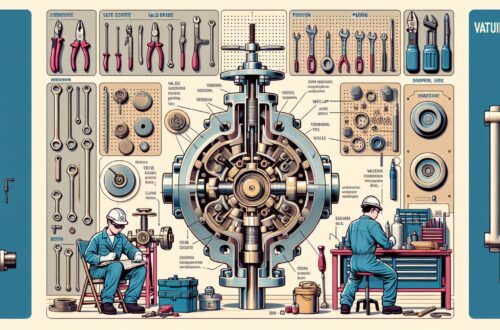
Gate Valves: Understanding, Selection, and Installation
Gate valves, one of the most essential types of valves, play a vital role in controlling fluid flow in industries like oil and gas, chemical, petrochemical, water distribution, wastewater treatment, and power generation. This article aims to offer a comprehensive understanding of gate valves – their functioning, selection, and installation process.
How does a Gate Valve Work?
Gate valves, sometimes referred to as sluice valves, use a flat ‘gate’ or wedge that can be moved up and down in the fluid channel to manage flow. The gate is a complete obstruction when closed and offers very little resistance to the flow when open, providing a straight and unobstructed passage for fluid [^1^]. These valves are typically operated by turning a handwheel.
[^1^]: Introduction to Gate Valves – The Process Piping
Gate Valves Design and Types
The gate valve design has the gate or wedge connected to a stem, which is operated by a handwheel. The two main types of gate valves are parallel and wedge-shaped.
Parallel gate valves have a flat gate between two parallel seats, and a popular variation of this type is the knife gate valve. Wedge-shaped gate valves use two inclined seats and a slightly mismatched inclined gate. They split into two kinds: solid wedges (appropriate for most applications) and flexible wedges [^2^].
[^2^]: Types of Gate Valve and Parts – A Complete Guide for Engineer
Gate Valves Applications and Selection
Gate valves are ideal for on/off control applications with low-pressure drop and a straight flow path. They handle viscous fluids with suspended solids effectively, including oil, gas, steam, slurries, and wastewater. However, they are not suitable for throttling as the high fluid speed can cause the valve to vibrate.
Selecting the right gate valve entails considering various factors like fluid characteristics, pressure, temperature, valve size, end connections, and industry standards. For corrosive environments, corrosion-resistant materials should be chosen. Valve materials can range from cast iron, ductile iron, bronze, carbon steel, stainless steel, to exotic alloys, and the selection should align with the application needs [^3^].
[^3^]: Gate Valves Information – Engineering360
Gate Valves Installation and Maintenance
Proper installation of a gate valve ensures efficiency and longevity. For a typical installation, the valve is placed into the line using appropriate fittings and tightened securely, ensuring correct valve orientation (flow direction typically embossed on the valve body).
Gate valve maintenance procedures include periodic cleaning, checking for leaks, replacing worn parts, and ensuring proper lubrication of the stem. Also, if the valve needs to be frequently operated, it’s recommended to install an actuator for easy operation.
Final Thoughts
Gate valves are an invaluable part of many industrial applications, offering reliable on/off control for a variety of fluids. Understanding their functionality, selecting correctly based on application needs, and ensuring proper installation can significantly enhance the efficiency of any fluid handling system.
[^4^]: Valve Installation – Valve Manufacturers Association of America