Ball Valves: Immense Versatility and All-round Performance
In the heart of many industries, you can find a device working silently, efficiently, and endlessly valuing its role in regulating the flow of liquids or gases in piped conduit. This device, a valve, comes in various shapes and forms, and one of the most common and versatile types is the ball valve.
If you’ve ever stopped to wonder how utilities and industries regulate and control their vast network of pipes, this article will introduce you to the incredible importance and uses of ball valves.
The Ball Valve: Let’s Break It Down
Unlike other types of valves that rely on a flap or a gate to prevent or allow the flow of the medium, ball valves utilize a spherical disc, or ball. This ball has a hole that, when positioned in line with the pathway, allows the media to flow freely. When the hole is perpendicular to the flow path, it seals and interrupts the media’s flow[^1^]. This operation makes ball valves an excellent option for shut-off applications, among others.
Exploring The Applications
Ball valves are widely employed across numerous industries due to their excellent shut-off capabilities, their resistance to wear and corrosive elements, and their ability to perform at high pressures and temperatures. They can be found in home plumbing systems, water and sewage processing plants, the oil and gas industry, the power sector, and food and beverage production.
In power plants, for instance, ball valves control steam flow; oil and gas companies employ them in realms of extraction, processing, and transportation of crude and its products. In the aerospace industry, they’ve found their importance in fuel shutoff applications, while everyday appliances like washing machines and dishwashers use them during various operational cycles[^2^].
The Anatomy of a Ball Valve
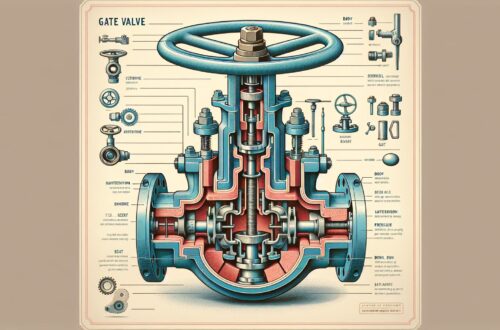
The basic anatomy of a ball valve consists of a valve body, a ball, a valve stem, and rubber-coated seats that seal the pathway when the valve is closed. The ball is operated by the stem, which is connected to a lever or a handle on the outside.
As simple as they may seem, ball valves are available in various designs, each suited to different kinds of applications. Common variations include floating ball valves, trunnion ball valves, V-notch ball valves, each having its unique advantages and uses[^3^].
The Pros and the Expertise
Having a simple design means that ball valves are relatively easy to manufacture and use. They are quite reliable, offering a tight seal that prevents leaks both in the open and closed positions, and involving few moving parts, which results in lower maintenance requirements.
Besides the general advantages, choosing the right ball valve depends heavily on the application. Factors to consider include the materials used, the valve’s size, pressure, and temperature ratings, and the specific requirements based on the medium being managed.
In Conclusion
This article introduced you to the world of ball valves, showing how these devices have embedded themselves in many aspects of our lives. From the simplest home appliances to the most complex industrial machinery, ball valves quietly work to control, regulate, and provide safety. They have proven their mettle and will continue to do so as innovation marches on.
So, the next time you turn on the tap, remember the technology at work behind the scenes, enabling you to enjoy clean, running water, proper sewage management, safe and reliable energy, and much more.
[^1^]: “What is a Ball Valve?” – Valve Solutions. Available online at: https://valvesolutions.com/ball-valve
[^2^]: “Industrial Applications of Ball Valves” – Alfa Laval. Available online at: https://www.alfalaval.com/industries/ball-valves
[^3^]: “Types of Ball Valves” – Humphrey Products. Available online at: https://humphrey-products.com/ball-valve-types