An Essential Guide to Ball Valves
Ball valves are essential elements in many industries that involve fluid handling and processing. This article will delve into the details of ball valves, their design, function, applications, benefits, and maintenance.
What are Ball Valves?
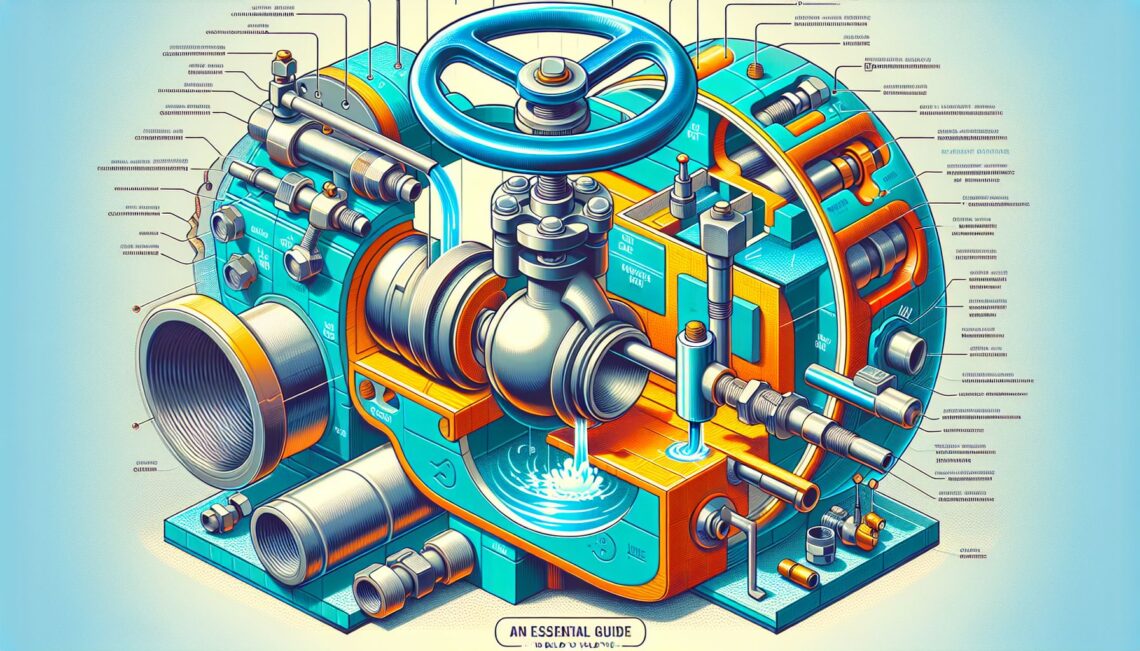
Ball valves are a type of quarter-turn valve which controls the flow of fluid or gas through a pipeline by using a hollow, perforated, and pivoting ball, commonly referred to as a “floating ball.” It is open when the ball’s hole is aligned in the direction of the flow and closed when it is pivoted 90-degrees by the valve handle^1^.
Design and Parts of Ball Valves
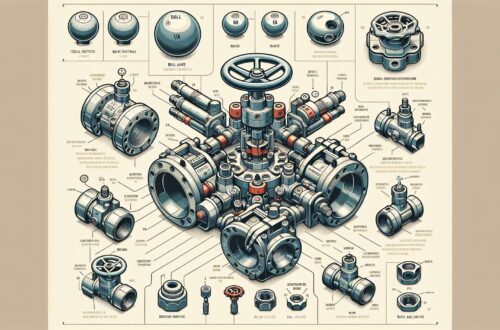
The primary components of a ball valve are:
- Valve body: The solid casing providing pressure boundary and fluid containment.
- Ball: Located in the center of the valve, it is a spherical disc usually made of metal or plastic.
- Seats: These create a leak-tight seal when the valve is in closed position.
- Stem: The connection between the valve and the actuator outside the valve body.
- Handle or actuator: The tool used to manually operate or automatically activate the valve.
Types of Ball Valves
There are three main types of ball valves:
- Full Port Ball Valves: The bore size of the valve equals the pipeline’s inner diameter, ensuring minimal pressure drop.
- Reduced Port Ball Valves: The bore size is smaller than the pipeline’s inner diameter, resulting in a higher pressure drop.
- V-Port Ball Valves: This type features a ‘V’ shaped ball, offering proportional control of fluid flow.
Applications of Ball Valves
Ball valves are widely used in many industries due to their excellent shutoff capabilities, compact size, and broad range of operating temperatures and pressures. Industries that use ball valves most frequently include Oil and Gas, Petrochemical, Maritime, Food and Beverage, Pharmaceutical, and Water Treatment^2^.
Benefits of Ball Valves
The benefits of ball valves include:
- Excellent sealing and reliable shutoff even after long periods of disuse.
- Quick and easy operation: just a 90-degree turn to open or close the valve.
- Robust design and simple construction for minimal maintenance.
- High flow rates with low pressure drop.
- Ability to operate in harsh conditions and extreme temperatures.
- Suitable for on-off service as well as throttling service.
Maintenance of Ball Valves
Maintaining ball valves can prolong their lifespan and ensure efficient operation. This involves regular periodic inspection of the ball, seats and seals for signs of wear or damage. Leaks are another critical factor to look for during these checks^3^.
Conclusion
In conclusion, ball valves play crucial roles in many industries requiring the control of fluid flow. Understanding their applications, components, types, benefits, and maintenance is vital for anyone working with these valves. The fact that they are reliable, easy to use, and require minimal maintenance adds to their popularity in diverse fields.
Sources:
^1^ GRM Flow Products
^2^ Assured Automation
^3^ Tameson