Everything You Need to Know About Gate Valves
Gate valves are a variety of control valves primarily used in the industrial and commercial sectors today. They are easily recognized by their gate-like appearance—their most distinctive feature—and they fulfill a variety of functions, making them an indispensable part of several industries. In this article, we delve deep into the world of gate valves, covering everything from their basic structure and operation to their specialized uses and maintenance tips. Let’s get started.
What are Gate Valves?
Simply put, gate valves control the flow of liquid by either ‘opening’ or ‘closing’ the way. In a wider context, they play an instrumental role in controlling the process throughout many of the vast and complex industrial operations. While on a micro level, they are extensively used in many common home appliances [^1^].
[^1^]: What is a Gate Valve?
The Structure of Gate Valves
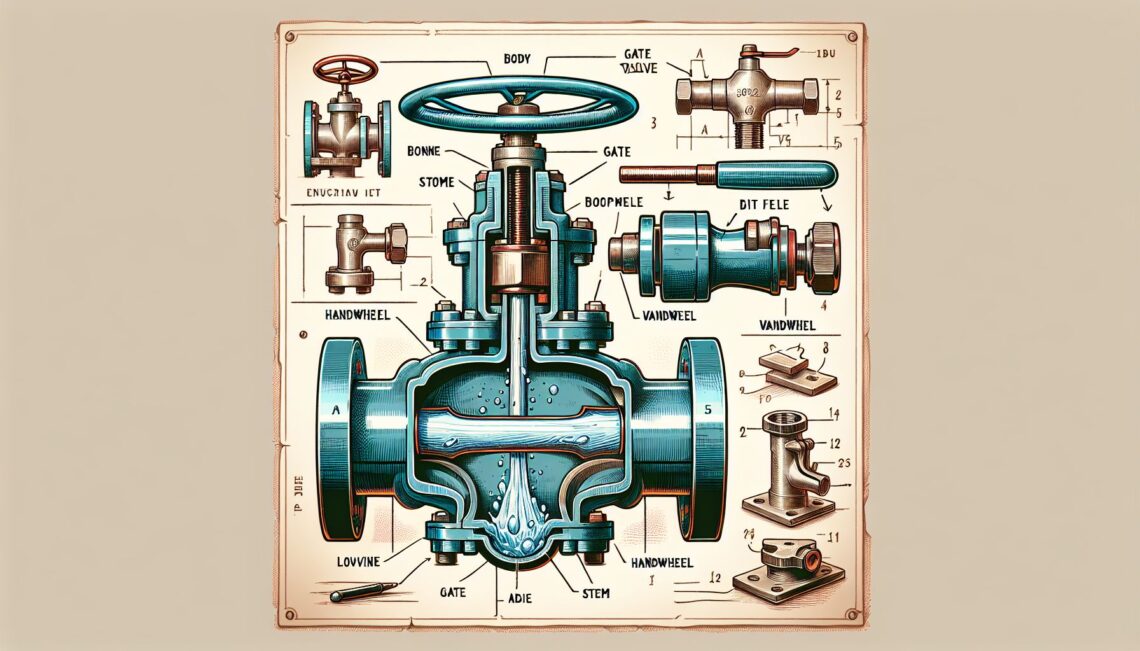
Gate valves are composed of a body and a ‘gate.’ The body is the main part, housing the flowing material and all its other features. The gate is the functional part of the valve: when it is down and positioned correctly, it completely blocks off the body, preventing the fluid in the pipe from passing. However, when the handle or wheel—that is attached to an elongated stem—is turned, it elevates the gate, allowing the fluid to pass freely.
Different Types and Where are They Used?
Solid Wedge Valve
Elucidating by the name, this valve features a solid wedge-shaped disc which is one piece to block off the fluid. This simplicity proffers a sturdy and robust design, allowing it to be used in multiple environments, temperatures, and pressures, and hence, are common in day-to-day applications.
Flexible Wedge Valve
The flexible design provides relief from tension by flexing under the influence of varying temperatures. These are usually spotted in systems dealing with thermal expansion such as in heating and cooling systems.
Split Wedge Valve
Split Wedge or double-disc gate valve inherently balances the rigidity of a solid wedge valve and the flexibility of a flexible wedge valve. It works well in piping systems that necessitate bi-directional flow.
Proper installation and maintenance is a must
Like any other machinery, gate valves perform best when appropriately installed and maintained. After picking the right kind of gate valve suitable for your need, it is crucial to install it correctly. Here, it is recommended to follow the manufacturer’s installation and maintenance recommendations.
One of the most common maintenance activity includes lubricating the moving parts and replacing worn-out sections. Regular inspections can help early detection of issues and hence, paves the way for a prompt resolution.
Bottom Line
Gate valves are a reliable and long-lasting solution to control flow in a vast array of applications. While the initial cost may seem intimidating, it is compensated for by its longevity and minimal need for repair or replacement. The key is choosing the right type and maintaining it properly.
[^2^]: The Role of Gate Valves (Criticality and Maintenance Best Practices)
[^3^]: Different Types of Valves used in Piping – A Complete Guide