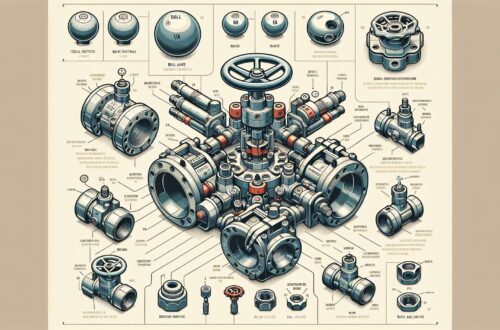
All About Ball Valves: An Insight Into Sizing, Selection, Installation, and Maintenance
Ball valves are a type of valve highly suited to shutoff applications. They are extensively utilized in various industries due to their reliability, durability, and spectacular ability to handle higher amounts of pressure. This article is designed to provide an in-depth discussion of these workhorse valves, including their sizing, selection, installation, and maintenance.
Sizing Ball Valves
The size of a ball valve is significant as it affects its function and effectiveness. To size a ball valve, measurements need to be taken of both the internal and external pipe diameters. Internal diameter refers to the size of the passageway through which the fluid will flow, while external diameter includes the thickness of the pipe wall.
Valve sizes are usually specified in nominal pipe sizes (NPS), which can range from 0.5 inches to 48 inches. When selecting a ball valve, you must ensure the specified size suits your pipeline. It’s also essential to consider the valve’s pressure rating, which determines the maximum pressure it can handle without causing damage.
Please refer to ‘Valve Sizing and Selection Manual’ from McMaster University for a detailed discussion of this issue. [1]
Selecting Ball Valves
Valve selection is crucial for the efficiency and safety of your pipeline system. Here are a few important factors to consider while selecting a ball valve:
-
Material: The material of the ball valve must be compatible with the fluid it will control.
-
Temperature Limit: Ensure the valve will operate effectively under the expected temperature conditions.
-
Pressure Rating: The valve’s pressure rating must comply with the maximum pressure in the pipeline.
Refer to ‘Selecting the Right Valve’ published by Swagelok for a more comprehensive guide on this subject. [2]
Installing Ball Valves
Ball valve installation requires the right skills and tools. A few steps to follow for a safe and correct installation include:
-
Identifying the flow direction: Ball valves have an arrow on their body to specify the flow direction.
-
Preparing the pipe: Clean and deburr the pipe ends before installing the valve.
-
Tightening the valve: Use suitable tools to secure the valve onto the pipe.
For a step-by-step guide with illustrations, refer to ‘Ball Valve Installation: Step by Step Guide’ by RS Components. [3]
Maintaining Ball Valves
Regular maintenance helps to prolong the life of ball valves and ensures continual effective operation. Some maintenance tips include:
-
Regularly inspect the ball valve and surrounding pipes for signs of wear, leakage, or other issues.
-
Lubricate the ball valve regularly to prevent seizing and increase longevity.
-
Also, check for corrosion periodically and replace the valve if corrosion is severe.
Maintenance procedures can differ significantly depending on the valve type and manufacturer; always refer to the manufacturer’s manual for exact maintenance procedures.
Conclusion
Ball valves are integral components of any fluid handling system, playing a critical role in controlling flow and maintaining system safety. Understanding how to size, select, install, and maintain these valves can help improve system efficiency, safety, and longevity.
Sources
[1] McMaster University, ‘Valve Sizing and Selection Manual’.
[2] Swagelok, ‘Choosing the Right Valve’.
[3] RS Components, ‘Ball Valve Installation: Step by Step Guide’.