The Comprehensive Guide to Butterfly Valves
As our industrialized world continues to grow and evolve, the role of valves in virtually all industries cannot be overstated. Among the plethora of valve types utilized in various operations, the Butterfly Valve is one of the most remarkable. Butterfly valves play a pivotal role in controlling the flow of fluids in various systems. Let’s take an extensive dive into understanding what butterfly valves are, their parts, types, applications, advantages and disadvantages, and finally, a glimpse into selecting and maintaining these vital elements.
Understanding Butterfly Valves
Butterfly valves, named for the wing-like action of the disc, occupy an essential place in the realm of valve technology. They are typically used as shutoff valves that allow for relatively fast operation and low pressure drops[^1^]. Like any other valve, butterfly valves are designed for either isolation or throttling purposes in systems.
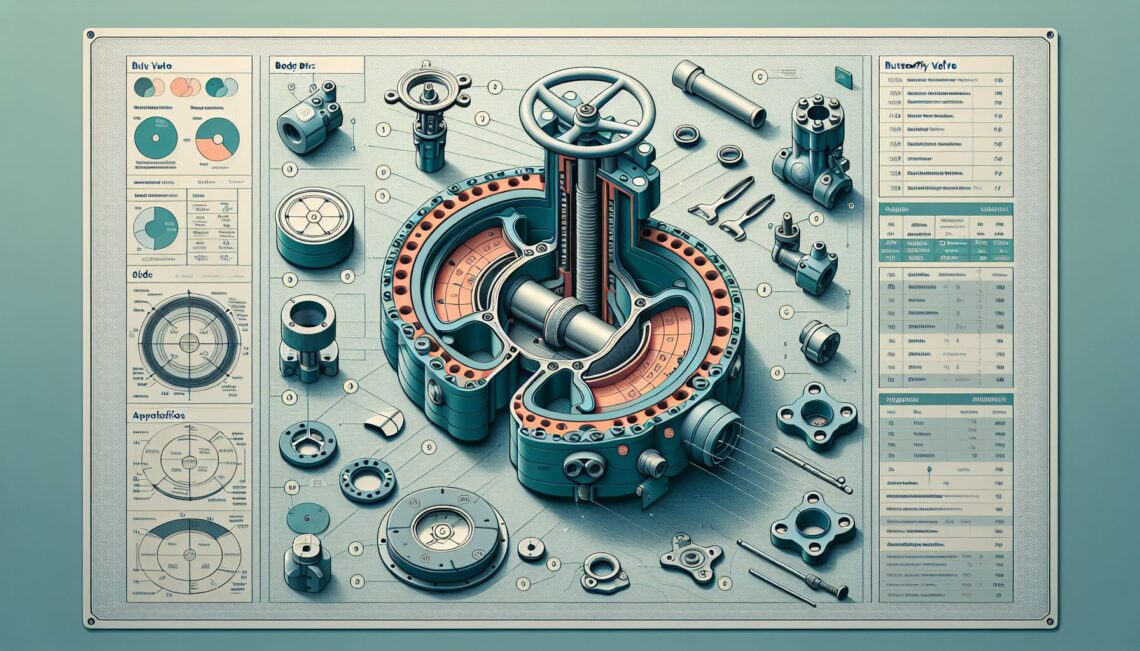
Parts of a Butterfly Valve
A butterfly valve is generally composed of the following parts:
- Body: This houses the valve and can either be resilient seated, high performance, or double eccentric. It usually comes in two forms – lug type (lighter and easier to install) and wafer type (installed between two flanges).
- Disc: The disk is the valve element which controls fluid passage.
- Stem: This connects the handle or actuator to the disc.
Types of Butterfly Valves
Here are the three main types of Butterfly valves:
1. Concentric Butterfly Valves: These are simple and commonly used valves in which the disc rotates around the center axis.
2. Double-eccentric Butterfly Valves: Here, the disc rotates around an axis that is offset from the center, leading to a less friction between the disc and valve body.
3. Triple-eccentric Butterfly Valves: These valves feature a disc that not only is rotated off the center axis, but is also designed so that it seals against the seat only at the end of its closing cycle[^2^].
Applications
Butterfly valves serve a multitude of functions in various industries. Some notable applications include HVAC, fire protection, domestic water systems, and industrial water systems[^1^].
Advantages and Disadvantages
Advantages
1. Compact and lightweight
2. Quick operation
3. Low pressure drop
4. Can handle large flow rates
5. Cost-effective
Disadvantages
1. Not best for throttling applications
2. Not suitable for high pressure and temperature applications
Selecting the Right Butterfly Valve
Selecting the appropriate butterfly valve is dependent on factors like function, size, type of fluid, and the material of construction. You must also consider pressure ratings, leakage tolerance and, in some cases, the actuator type[^3^].
Maintenance of Butterfly Valves
Like with most equipment, regular maintenance is crucial for optimal performance and longevity. It is important to periodically check the functioning of the valve, look for signs of leakage, and carry out necessary repairs. Ensure that the actuation is properly serviced and the packing tightened to the manufacturer’s specification to prevent leaks. When in doubt, always refer to the manufacturer’s instructions.
In summary, butterfly valves are an essential part of modern industries. Their ability to control flow and regulate pressures has made them vital for a variety of applications. While understanding the different types and components of butterfly valves is essential, equally crucial is the knowledge of their maintenance and factors to consider when selecting one.
This guide provides just a snapshot into the world of butterfly valves. As technology evolves, so will these vital mechanisms, adapting to meet the ever-changing needs of the industries they serve.
[^1^]: Butterfly Valves: Design, Types, Function, and Applications
[^2^]: What is a Butterfly Valve?
[^3^]: Selection and Maintenance of Butterfly Valves