A Comprehensive Guide to Gate Valves
Gate valves, also known as sluice valves, are commonly used in industrial piping systems to control fluid flow. Their versatility and reliability make them an important piece of hardware, with applications ranging from house utilities to major industrial operations. They allow a comprehensive control of fluid flow, providing fast cessation or resumption of flow. In this guide, we will navigate through the whole concept of gate valves, from their design and function to valve materials, operation, installation, and maintenance.
What are Gate Valives?
Gate valves are a type of pertinacious sluice that stands in the path of a flowing fluid, demonstrating its control over the entire situation. Its primary function is to either completely open or close the passageway of fluid flow. Unlike many other types of valves, they are not used to regulate flow, which is why they are either fully opened or fully closed[^1^].
Design and Function
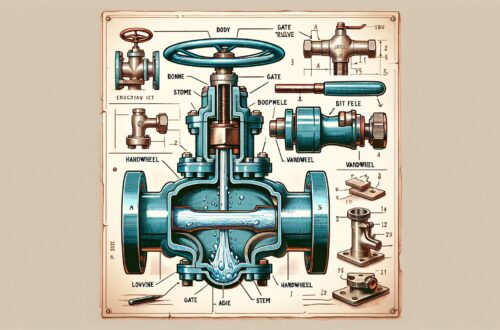
A typical gate valve consists of components including the valve’s body, stem, and handle, bonnet, gate (also referred to as the disc or wedge), and seats. The valve’s body is connected to the pipeline, creating a path for the fluid to flow. The shape and design of the valve body generally falls under three types: straight-through, Y-type, or angle valves[^1^].
When the valve handle is turned, it moves the stem, which raises or lowers the gate disc. This gate can halt the fluid flow when it is fully lowered or allow it to pass through when it’s wholly raised[^2^].
Valve Materials
Materials used in manufacturing gate valves must tolerate lots of stress and potentially corrosive material, hence commonly constructed materials include ductile iron, cast steel, stainless steel, tungsten carbide, alloy 20, and bronze. The selection of material significantly depends upon the nature and temperature of the fluid it will be controlling and the pressure it will have to withstand[^3^].
Valve Operation
The handwheel attached to the stem of a gate valve serves to move the gate disc. Turning the handwheel in a clockwise direction lowers the gate, stopping the flow of fluid. Conversely, turning the wheel counterclockwise raises the gate, allowing the fluid to pass[^2^].
Despite how user-friendly they might seem, gate valves should not be used for throttling. This is because they cannot handle the resulting vibrations and will eventually wear out leading to leakage.
Valve Installation
Installation process of a gate valve is pretty straightforward yet critical. Valves should be installed so that the flow direction is under the disc to prevent the fluid’s energy from lifting the disc while the valve is closed[^1^]. It’s also essential to ensure that the valve is easily accessible for operation and maintenance[^2^].
Valve Maintenance and Repair
Regular maintenance of gate valves includes periodic inspection for leaks and ensuring the valves can be fully opened and fully closed. If leaks are detected or the valve cannot be operated, repairs may be required.
Instead of replacement, refurbishing is often more budget-friendly. This typically involves replacing the packing material, gate disc, and other damaged parts. Most importantly, regular maintenance can prevent serious damages and prolong the valve’s lifespan.
Conclusion
In general, gate valves prove to be very functional and cost-effective tools in multiple industrial processes. Understanding their construction, installation, and maintenance procedures can greatly optimize their performance and longevity.
Even though they are an integral part of any major pipeline system, their use can lead to significant hazards if not operated or maintained properly. Proper training and knowledge about these devices are very crucial to prevent any potential risks associated with their operation.
[^1^]: E.H. Mohammed et al., “Design and simulation of gate valve using CAD/CAE software.” International Journal of Engineering Research and Technology, 2013.
[^2^]: R. Angus, “Alternative methods for the reduction of emissions from valves.” Journal of Loss Prevention in the Process Industries, 1997.
[^3^]: L.P. Richards, “How to Select Materials for a Valve: An End-User’s Prospective.” Valve World, 2019.