The Importance of Choosing the Right Valve: Guide to Valve Selection
The world of industrial manufacturing and related processes involves vast and complex systems. Among these systems, valves hold an essential place. From controlling the flow of water in your home to managing high-pressure hydraulic systems in an industrial plant, valves serve indispensable functions. Selecting the most suitable valve, from a plethora of options, is crucial to ensure efficient and safe operations. In this article, we dive into the intricate details of valve selection and help you understand the factors that make a certain type of valve the right choice for a specific application.
The Basics: What is a Valve?
A valve is a mechanical device that controls the flow of fluid (liquids, gases, fluidized solids, or slurries) by opening, closing, or partially obstructing various passageways. Valves are widely used in many industrial applications, including petrochemical, pharmaceutical, and food and beverage industries due to their versatility in controlling flow rate, pressure, and direction[^1^].
Factors that Influence Valve Selection
Several factors must be considered during the valve selection process:
-
Fluid type: The nature of the fluid that will flow through the valve is critical. Companies must consider whether the fluid is corrosive, whether it contains solid particles, or if it is at high temperature.
-
Operation conditions: Operating conditions such as pressure, temperature, and flow rate significantly influence the selection of valves. Some valves are designed for high-pressure environments, while others are suitable for low-pressure conditions.
-
Valve function: The purpose of the valve is another significant factor. Some valves are used for throttling or controlling flow, while others are used for shutting off or isolation.
Let’s delve deeper into the most commonly used types of valves and explore the factors that determine their suitability for an application.
Common Types of Valves
There are various types of valves, each with its unique advantages and applications. Here, we discuss some of the most common ones:
-
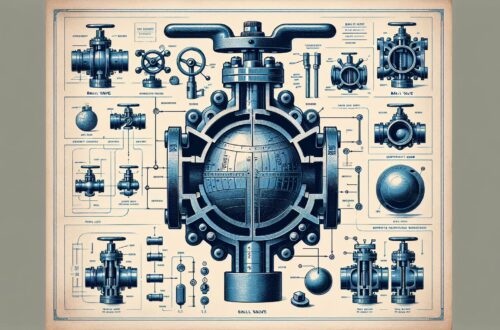
Ball Valves: Ball valves are quarter-turn rotational motion valves that use a ball-shaped disk to control flow. They are generally used in situations requiring shut-off or control applications. Their compact size and quick operation make them an excellent choice for many applications[^2^].
-
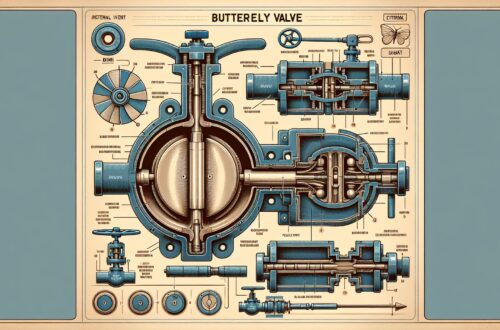
Butterfly Valves: Butterfly valves are also quarter-turn valves and are commonly used for flow regulation in large pipe diameters. Their compact design, cost-effectiveness, and easy operation make them suitable for various applications such as water distribution, chemical services, and food processing.
-
Gate Valves: Gate valves, also known as sluice valves, are often used for on/off control of flow. They are ideal for applications where minimum pressure drop and a free bore are necessary.
-
Globe Valves: These are excellent for throttling and frequent operation because of the ease of regulating the flow. The valve’s structure is designed to regulate and control flow, making it suitable for cooling water systems, fuel oil systems, and turbine lube oil systems.
-
Check Valves: These valves are two-port valves, meaning they have two openings in the body, one for fluid to enter and the other for fluid to leave. Check valves work automatically and are used to prevent backflow in a system[^3^].
Importance of Proper Valve Selection
Selecting the appropriate valve for your operations can significantly impact the system’s efficiency and the safety of your operations. A wrongly chosen valve can cause system malfunctions, leading to fluid leakage, loss of pressure, or even system shut-down. On the other hand, the right valve can increase operating efficiency, reduce maintenance requirements, and improve safety. Hence, a thorough understanding of the factors influencing valve selection can help in making well-informed decisions.
Conclusion
Understanding the intricacies of valve selection can be daunting. However, with proper guidance and knowledge, one can master the industrial world’s valve maze. Remember that proper valve selection is crucial to ensure the safety and efficiency of your operations.
Once you have chosen the right valve, regular maintenance is essential. Regular valve testing and maintenance can prevent potential valve leaks or malfunctioning. If not regularly maintained, a valve can degrade, decreasing system performance and increasing the probability of a system failure.
In closing, the valve selection process requires careful consideration of several critical factors. It is crucial to understand the application, the type of fluid, the operating conditions, and the specific function that the valve plays in the system. Armed with a clear understanding of these elements, engineers and procurement professionals will be better equipped to select the best valve for their application.
[^1^]: J.D. Smith, J.R. Harper, ‘Valves, Piping and Pipelines Handbook’, Elsevier, 2004.
[^2^]: F.R. Spellman, ‘Handbook of Water and Wastewater Treatment Plant Operations’, CRC press, 2013.
[^3^]: P.C. Sharma, ‘A Textbook of Production Engineering, ‘Khanna Publishers, 2017.