Ball Valves: An Essential Component For Fluid Control Systems
In the exciting world of fluid management, there’s a fascinating array of equipment and machinery, each with its role in ensuring efficiency, safety, and productivity. Yes, it’s not your everyday chit-chat, but for industries like oil & gas, chemical, mining, water, and wastewater treatment, this is an integral conversation. In today’s review, we will unravel the complexities of one such critical element, the Ball Valve.
Understanding Ball Valves
It’s not hard to decrypt what a ball valve might look like. As the name suggests, it has a spherical component, a ball, with a hole right through its center[^1^]. But, truthfully, there’s more to this sophisticated device.
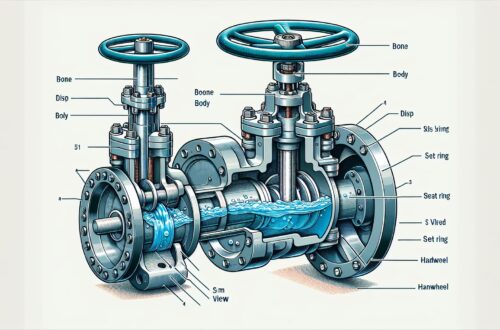
Ball valves are formidable devices that control the flow of fluids, gases, or slurries in systems by opening, closing, or partially obstructing their path. When the valve is open, the hollowed-out sphere aligns with the flow, enabling fluid to pass through freely. In contrast, a swift quarter-turn (90°) rotation aligns the solid portion of the ball with the flow, blocking it entirely.
Types and Applications
There are three main types of ball valves: Full port, reduced port, and V port[^2^]. The full port ball valve offers the least resistance to the fluid flow, while the V-port valve, with its ‘V’ shaped ball, can be set to permit any amount between 0% and 100% flow.
Ball valves are indispensable in a variety of sectors. The oil and gas industry, for instance, heavily relies on them in their transmission pipelines. They are also quite critical in maintaining fluid control in volatile applications where tight shut-offs are necessary.
Wastewater management, chemical plants, residential applications, and the food and beverage industry also substantially employ these devices[^3^].
Benefits and Limitations
One of the significant advantages of ball valves is their robust and straightforward design that provides a reliable seal and excellent throttling characteristics. Additionally, these valves are easy to use, repair, and maintain, adding to their cost-effectiveness.
Downsides? They do exist. Although ball valves are excellent for on/off operations, they are not as effective for regulating flow due to the lack of detailed control over their opening and closing.
Final Thoughts
With this brief dive into the intricate world of ball valves, it’s clear to understand these pivotal devices are far more than ‘balls with a hole.’ They are significant contributors to a plethora of industries, ensuring systems operate effectively, keeping both productivity and safety in check.
However, like every piece of equipment, ball valves might have limitations, and their selection should depend on the appropriate operational and environmental conditions. As always in life and fluid control systems, choosing wisely is the key to success!
[^1^]: ThoughtCo – Ball Valve Information
[^2^]: PVC Fittings Online – Types of Ball Valves
[^3^]: Engineering Toolbox – Industrial Valves