Solenoid Valves: Significance, Functionality, and Applications
In this article, we will delve deep into the world of solenoid valves, exploring their prevalence and importance in numerous sectors. Solenoid valves are a fundamental component of various systems, serving as control elements for fluids and gases. They have proved to be quintessential for many applications within multiple industries, such as automotive, oil and gas, water treatment, food and beverage, and more.
This article will provide a comprehensive guide on solenoid valves, aiming to investigate their function, types, applications, and several essential points to consider while selecting and maintaining these valves.
What is a Solenoid Valve?
In basic terms, a solenoid valve is an electromechanically operated valve that controls the flow of a fluid or gas. These electrically activated valves are typically composed of a solenoid coil and a moveable plunger acting as a valve. The solenoid acts as an electromagnet when an electric current passes through it, generating a magnetic field that controls valve’s plunger movement, thereby regulating the fluid/gas flow.
How do Solenoid Valves Function?
Solenoid valves operate by passing an electrical current through a solenoid that activates the magnet. When the electromagnet is activated, it either pushes or pulls the plunger, causing the valve to open or close. If the current is switched off, then the valve returns to its resting state, usually by a spring mechanism.
There are routinely used types of solenoid valves: direct acting and pilot operated. Direct acting solenoid valves have a plunger directly linked to the valve’s seal, while pilot operated solenoid valves utilize pressure differential to aid in valve operation.
Applications of Solenoid Valves
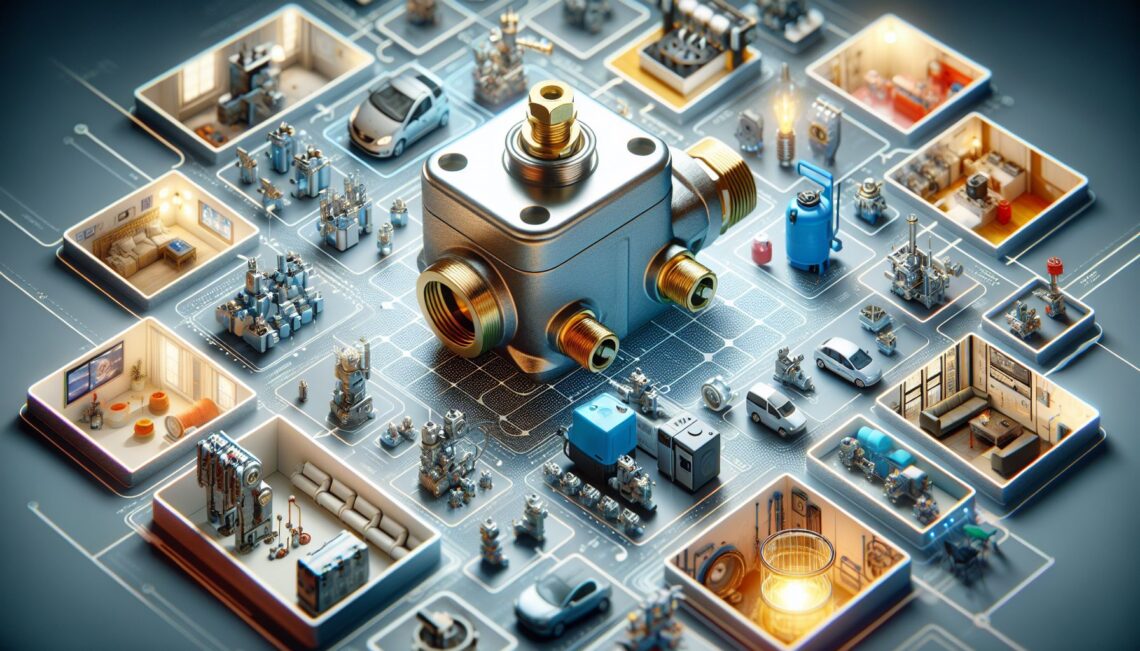
Solenoid valves are ubiquitous in several industries due to their efficiency and versatility. Some of their primary usages include:
- Automotive Industry: They are utilized to control the flow of air and other fluids within the vehicle systems.
- Home Appliances: Washing machines, dishwashers, and other appliances use solenoid valves to control water flow.
- Heating, Ventilation, and Air Conditioning (HVAC): HVAC systems use venting solenoid valves to ensure air and gas flow precisely.
- Pneumatics and Hydraulics: They are used to control the flow of pressurized air or hydraulic fluid.
- Industrial Automation: In automated production lines, solenoid valves control the flow of various fluids and gases.
Selecting a Solenoid Valve
When selecting a solenoid valve for your application, several factors come into play:
- Type of Fluid or Gas: The type of fluid or gas to be controlled determines the materials to be used in constructing the valve.
- Operating Pressure: Solenoid valves should be selected based on the operating pressure of the system.
- Temperature: Extreme temperatures can affect the performance of a solenoid valve, and should be considered when choosing a valve.
- Energy Consumption: Different solenoid valves have varying specifications in terms of energy consumed.
- Operation Type: The valve choice will depend on whether the solenoid is to work continuously or intermittently.
Maintenance of Solenoid Valves
Regular maintenance is necessary for solenoid valves to ensure reliable performance and extend their lifespan. Predictive and preventive maintenance methods, such as monitoring current leakage, voltage drops, and magnetic field strength, can help ensure valve longevity.
To conclude, solenoid valves play a crucial role in various systems and industries. Although selected based on the application requirements, its efficient functionality, reliability, and versatility make it a staple in fluid and gas control situations.
Sources: