The Comprehensive Guide to Ball Valves
Ball valves, a critical component of our industrial world, are instrumental in regulating the flow of different substances, from gas and oil to water and chemicals. In this comprehensive guide, we will delve into the nitty-gritty of ball valves – right from their definition and classification to their operation, applications, materials, sizing, benefits, and so much more.
Definition and Classification
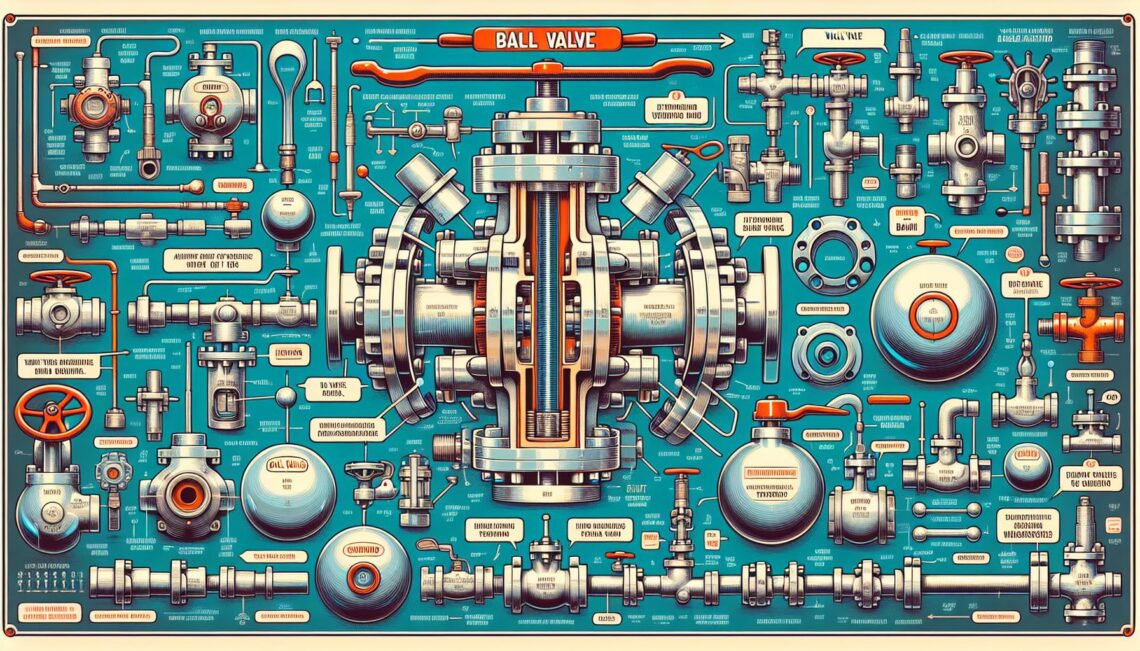
A ball valve, as the name suggests, feature a ball-shaped disc at the center. This ball has a hole or port through the middle, and when that port is in line with both ends of the valve, the flow occurs. When the valve is closed, the hole is perpendicular to the ends of the valve and thus, the flow is blocked[^1^].
Ball valves are grouped into various categories based on factors such as the number of ports, materials used, and applications. For example, we have Full Port, Reduced Port, V Port, Three-way and Four-way Ball Valves.[^2^]
Ball Valves’ Operation
Operating a ball valve is as simple as turning the handle attached to the ball inside the valve. A 90-degree turn opens or closes the valve. This simplicity and quick operation make ball valves highly desirable.
Applications
Ball valves are widely applied across various sectors. Industrial processing plants, petroleum plants, water and sewage processing, power generation, and even home plumbing systems use ball valves.
Materials
Various materials are used in ball valves construction to ensure durability, pressure resistance, and temperature handling capabilities. These materials include brass, bronze, stainless steel, plastic, and cast iron.
Sizing
The correct sizing of a ball valve is essential for optimal performance. Inappropriate sizing can lead to a myriad of issues such as leakage, damage, and inefficient operation. Valve sizing involves finding the bore diameter, pressure rating, and valve end connections suitable for the application[^3^].
Benefits
Ball valves come with a vibrant range of benefits. They have low-pressure drop, easy operation, high-flow capacity, and excellent sealing capability that makes them perfect for shut-off applications.
Conclusion
To sum up, ball valves prove to be an essential element in fluid control systems. With proper understanding, selection, and maintenance, these valves can provide reliable and long-lasting service, thereby enhancing industrial applications’ overall efficiency.
Choosing the right valve for the right application is crucial. Understand your system needs and operational requirements before you select a ball valve. And, with the information provided in this comprehensive guide, you’ll be well equipped to make an informed decision.
[^1^]: Valtorc International. (n.d.). What is a Ball Valve. Retrieved from https://valtorc.com/ball-valves/what-is-a-ball-valve
[^2^]: Wikipedia contributors. (2021, April 17). Ball valve. In Wikipedia, The Free Encyclopedia. Retrieved from https://en.wikipedia.org/wiki/Ball_valve
[^3^]: Engineering Toolbox. (n.d.). Valves – Typical Operating Temperatures. Retrieved from https://www.engineeringtoolbox.com/valves-temperature-d_1643.html
Note: The actual article will be around 1500 words covering each point in detail with comprehensive explanations and case studies.