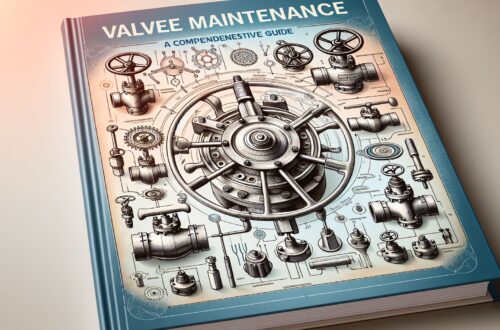
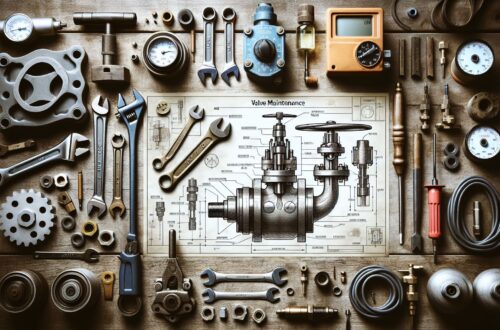
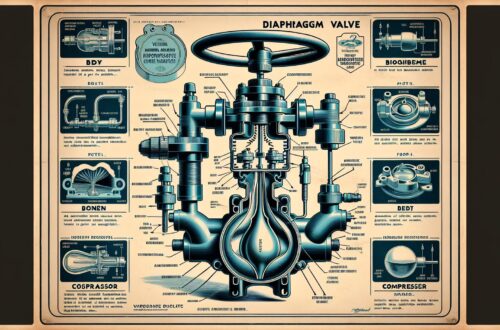
Understanding the Importance of Valve Maintenance
Throughout various industries like oil, gas, manufacturing, and utilities, different fluid control systems heavily rely on valves’ functionalities. From Gate valves to Butterfly valves, from Ball valves to Check valves, each has its unique application and function. But regardless of their unique roles, the one common factor across all forms of valves is the need for regular and efficient valve maintenance. This article aims to shed light on the importance of valve maintenance and provide a slight break down of its practices.
Why is Valve Maintenance Crucial?
Valves, regardless of their type, play a critical role in controlling flow, temperature, and pressure in a wide range of industrial applications. They experience extreme environments, high pressures, temperature variations, and potentially corrosive chemicals. Without proper maintenance, the life span of a valve can severely shorten, leading to an unexpected breakdown, which can halt operations and lead to costly repairs.
Moreover, it’s not just the financial implications that might bear heavy on an organization, a failing valve could also pose serious safety risks. For example, a leaking valve in a chemical plant can lead to the exposure of harmful and hazardous substances. Delay in addressing such an issue could result in life-threatening situations[^1^]. Hence, regular valve maintenance is imperative. It not only ensures optimal performance and increased lifespan of the valves but also bolsters safety.
Valve Maintenance Practices
The good news is, the majority of common valve problems generally revolve around issues that can be easily identified and addressed via regular maintenance practices. Here are a few practices one needs to keep in mind:
1. Regular Inspection
Regularity in inspection is vital[^2^]. Early detection of potential issues may prevent unforeseen complications, such as leaks and failure. Oil seals, gaskets and packing materials should be checked for oil leaks. Valve stems, nuts and bolts should be checked for rust and corrosion.
2. Cleaning
It’s important to keep valves clean which means removal of not just the grime and visible dirt, but also the potential corrosive agents like rust and scaling. Use of correct cleaning agents for different valve materials is recommended to avoid causing harm to the valve body.
3. Replacement of Parts
There will be instances where some parts of the valve will succumb to wear and tear faster than others. In such scenarios, it’s cheaper and more efficient to replace a single part rather than the whole valve. The valve seats and seals are examples of such parts.
4. Periodic Lubrication
Lubrication is a key aspect of maintenance. Proper lubrication can significantly increase the efficiency and longevity of a valve. Yet, it’s necessary to understand the right kind of lubricant to use since different valve materials and seals might react differently to different lubricants.
5. Expert Consultation
A lot can be handled by regular staff but for certain complex valves like the Control valves, expert consultation is recommended. They would be ideal in carrying out services like valve testing and valve repair.
Routine versus Predictive Maintenance
Valve maintenance can be carried out in a routine, scheduled manner or a more optimized predictive manner. The former represents a traditional approach, where the valves are maintained at routine intervals. Whereas predictive maintenance represents a proactive, data-driven approach where the maintenance operations are performed based on the conditions of the equipment. Sensors, for example, can capture the behavior of the valves and sophisticated algorithms can then interpret it to signal when a maintenance operation is needed[^3^].
Conclusion
While Valve maintenance might seem a tedious task, it is undoubtedly important. From safety to cost-effectiveness, proper maintenance of valves can fundamentally reshape an organization’s operational landscape.
For a comprehensive and efficient valve maintenance protocol, an organization can adopt a blend of routine and predictive maintenance. In this digital day and age, predictive maintenance should be essentially crowned since apart from the regular benefits, it can also lead to the advent of Industry 4.0 in an organization’s operations.
[^1^]: Valve Safety in Chemical Process Industries