Understanding Ball Valves: Design, Use, and Maintenance
Valves are the core controls of the flow of fluids and gases in various industries. They are mechanical devices that regulate, halt, or start the flow as desired. The varied types of valves such as butterfly valves, check valves, gate valves, and globe valves to name a few, serve different specific purposes. Today, we will focus on one of the most versatile and commonly used types, the Ball Valve.
What is a Ball Valve?
A ball valve, as the name implies, features a spherical disc or a ball-like component, having a hole or a port right through the middles. This disc or ball in the valve is responsible for the control of the flow through it. When the valve is open, the hole aligns with the direction of the flow, whereas in a closed position, it blocks the flow completely. Multiple kinds of ball valves exist, each with different applications and functionality [^1^].
[^1^]: “Ball Valves Information”, Engineering360, Accessed 31 Aug 2021.
How does a Ball Valve work?
Ball valves operate by rotating the valve’s ball with the attached handle. Rotation by 90 degrees either closes or opens the valve. When open, the drilled hole within the ball aligns with the flow path – giving a straight unobstructed path for flow. Conversely, rotating the handle so the valve is closed leaves the solid face of the ball facing the flow path, which blocks flow [^2^].
[^2^]: “Ball Valve Working Principle”, Adamant Valves, Accessed 31 Aug 2021.
Types of Ball Valves
Full Port Ball Valves
Full port ball valves, also known as full bore ball valves, have a bore internal diameter approximately equal to the pipe’s internal diameter. This provides a minimal resistance or ‘pressure drop’ to the flow of fluid, making them ideal for operations that require unhindered flow.
Reduced Port Ball Valves
Reduced port ball valves, also known as reduced bore ball valves, have a bore internal diameter less than the pipe’s internal diameter. This causes a pressure drop, which is sometimes desirable in applications that require controlled flow.
V-Port Ball Valves
V-port ball valves have a ‘v’ shaped ball or a ‘v’ shaped seat. This enables the orifice to be opened and closed in a very controlled manner. This design enables better control and regulation of flow, with closer throttling than most other types of ball valves.
Trunnion Ball Valves
These are a type of ball valve which use a mechanical means of supporting the ball. This is done to alleviate excess load on the valves, especially in larger and higher pressure service valves [^3^].
[^3^]: “Types of Ball Valves”, Piping Engineering, Accessed 31 Aug 2021.
Advantages and Disadvantages of Ball Valves
The main advantage of ball valves is their reliable sealing, which makes them an excellent choice for isolation applications. They are easy to operate, provide a clear indication of their status (whether open or closed), and require little maintenance.
One of the drawbacks of ball valves is their inability to regulate flow effectively. While they can control flow, they are not highly precise, which makes globe valves or needle valves a better choice for these applications.
Ball Valve Maintenance
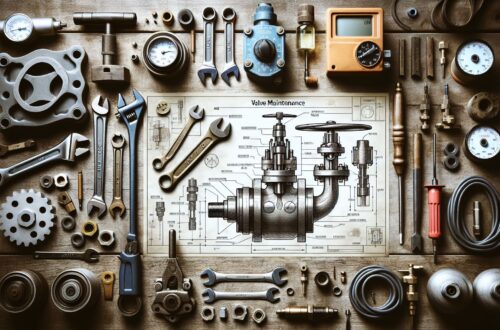
Like any mechanical device, ball valves require regular checks and maintenance for optimal operation. Regular cleaning, inspection for damage, and replacement of parts as necessary are part of basic valve maintenance.
In terms of cleaning, removing the residues of the fluids or gases that have passed through the ball valve is crucial. Leaving the inside dirty would hinder the operation of the valve and affect flow characteristics. Regularly scheduled inspections can help assess the condition of the valve, allowing for early detection of any irregularities or wear, and consequently making replacements as needed.
For valve repair and replacement, it is vital to understand the specific type, size, and material of the ball valve in question. Ensuring these parameters align during replacement is crucial for maintaining the valve’s functionality within the system.
Routine maintenance prolongs the life of a ball valve and helps avoid emergency shutdowns and improves safety within operations. Thus, putting an emphasis on regular valve maintenance can prove to be a valuable investment [^4^].
[^4^]: “Ball Valve Maintenance and Repair”, Industrial Controls, Accessed 31 Aug 2021.
In conclusion, ball valves, with their inherent simple construction, ease of operation, and durability with proper maintenance, are an invaluable asset in controlling the flow in various industrial applications. Their limitations should always be taken into consideration when choosing the appropriate valve for a specific application.
Whether it is a simple water supply system or complex chemical processing plant, the ball valve has surely found its place in efficiently controlling the flow of fluids and gases. Ensuring their longevity and efficient functioning requires understanding their design, operation, strengths, weaknesses, and maintenance needs. Understanding ball valves in depth is a fundamental aspect of managing flow within industrial settings.