Understanding the Importance of Ball Valves in Flow Control and Beyond

As we explore the world of industrial plant design and maintenance, one component becomes apparent due to its widespread application and crucial role in operations, the humble ball valve. Ball valves are one type of quarter-turn valve which utilize a hollow, perforated, and pivoting ball to control flow from open to closed and vice versa. The unique design allows the valve to allow for unobstructed flow when it’s fully open and blocks flow completely when it’s fully closed. Today we will delve into the intricacies of these valves, discussing everything from its construction, to its selection, installation, and eventual maintenance. Let’s get started!
The Basics of Ball Valves
At their essence, ball valves are designed with a rotating ball that has a hole through its center. The ball’s rotation is facilitated by a handle and an actuator attached to the ball’s stem, which makes a quarter turn (90 degrees) rotation. When turned in a way that the hole aligns with the pipeline, the valve is in its open configuration allowing flow, and when turned, so the hole is perpendicular to the pipeline, the valve is in its closed or off configuration, disallowing flow [^1^].
Design and Construction of Ball Valves
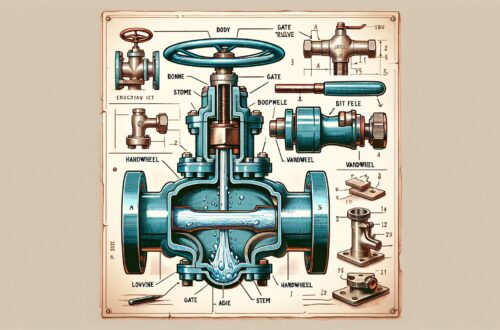
Next, we delve into the core of the ball valve: its design and construction. The main parts of a ball valve are the body, ball, stem, seats, bonnet, and handle or actuator. The body houses the ball and forms the main pressure boundary. The stem connects to the ball and handle to facilitate rotation. The ball, which gives the valve its name, has a hole through it. The seats form a seal between the ball and body. The handle allows for manual operation, while the actuator facilitates automatic settings, using electricity, pneumatic or hydraulic pressure, or a combination of these power sources [^2^].
Selection of Ball Valves
Often, engineers must select the right valve for a specific application. This is where understanding the valve’s materials, temperature, and pressure ratings become important. The selection process requires consideration of media type (what will be flowing through the valve), working pressure and temperature, flow rate (Cv value), end connection type (flange, threaded), and the method of actuation. Some ball valves are also designed for full port flow and are thus more suitable for services requiring minimal pressure drop [^2^].
Installation of Ball Valves
When it comes to the installation of ball valves, several crucial factors come into play. Positioning, for instance, can drastically affect the functioning of the valve. Therefore, it is best to install the valve in the horizontal section of the line. The flow direction should match the arrow shown on the valve body. Additionally, make sure the valve is easily accessible for operation, inspection, and maintenance. Paying careful attention to the manufacturer’s guidelines can also save a lot of trouble later on [^3^].
Maintenance and Repair of Ball Valves
Given the nature of their operation and the environments where they are used, ball valves inevitably require periodic maintenance and repair. It’s advisable to introduce a preventive maintenance schedule based on the manufacturer’s guidelines and adhere to it. Whenever maintenance or repair is carried out, the system pressure should be relieved, and the valve should be isolated. All the valve parts should be meticulously inspected for cracks, wear, or damage.
In a nutshell, ball valves play an integral role in a wide range of industrial applications, controlling flow and maintaining effective operation across numerous settings. Understanding the design, selection, installation, and maintenance of these valves is, therefore, crucial for anyone in this industry, offering the ability to ensure optimal functioning at all times.
While seemingly rudimentary in their construction, ball valves embody an impressive depth of engineering and are pivotal in controlling flow and ensuring safe and efficient operations across numerous industries.
[^1^]: Emerson Automation Solutions (2021). “Introduction to Ball Valves”. Retrieved from Emerson’s Official Website.
[^2^]: Valve Manufacturers Association of America (VMA) (2022). “Ball Valve Handbook”. Retrieved from VMA’s Official Website.
[^3^]: Swagelok (2021). “Proper Installation, Maintenance, and Troubleshooting of Ball Valves”. Retrieved from Swagelok’s Official Website.