A Comprehensive Look Into Gate Valves: Use, Maintenance, Selection, and More
Gate valves, sometimes referred to as sluice valves, are a critical component in numerous applications across several industries, including oil and gas, power plants, and water treatment facilities, among others. This article delves deep into these integral devices, their distinctions, how they function, what sort of maintenance they require, and tips to consider when choosing the suitable one for your operation.
What is a Gate Valve?
A gate valve is a type of shutoff contraption used to regulate the flow of fluid in a pipeline. They are suited for operations where minimal restriction is essential (1). They derive their name from the gate-like component, or “gate”, which moves up and down to control the fluid flow.
Gate Valve Construction and Operation
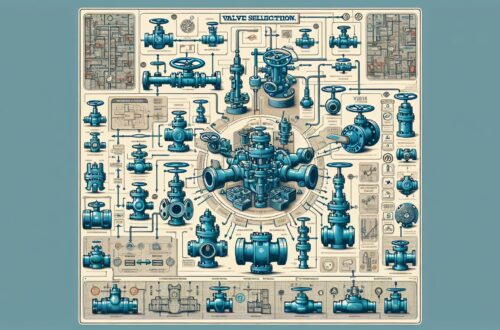
Gate valves comprise several essential parts: The body, which houses the actual valve, the bonnet effectively enclosing the valve body, the stem connecting the valve and the actuating mechanism, and the ‘gate’ mechanism, which is the key player in controlling fluid flow (2).
Operating a gate valve is straightforward. A clockwise turn of the handwheel or actuator causes the gate to lower, restricting and eventually cutting off flow. Conversely, an anticlockwise turn raises the gate, allowing fluid movement.
Gate Valve Maintenance
While gate valves are robust and durable, they still require regular maintenance for optimal operation and to ensure a more extended life span. Maintenance activities can include cleaning, lubrication, and repair or replacement of worn-out parts, particularly the gate and the stem (2).
Cleaning and lubrication
Routine cleaning and lubrication help prolong the lifespan of the valve. It is essential to shut down the system and depressurize it before being cleaned. Use a recommended cleaning agent depending on the nature of the residue in the valve.
Repair/Replacement
Following an extended period, certain parts of the valve, particularly the gate and stem, may endure wear and tear. Regular checking enables you to detect and rectify these issues before they cause major problems. Sometimes, the affected parts may require replacement.
Gate Valve Selection
Choosing the right valve is crucial to smooth operation and minimizing the risk of damages. Here are a few factors to consider when selecting a gate valve:
Valve Dimensions
The valve size should correspond with the pipeline dimensions within which it will be installed (3).
Material
Choose a material that can withstand the operating conditions. This decision should factor in the fluid’s nature, operating temperature, and pressure levels.
Type
There are various types of gate valves, including knife gate valve, parallel gate valves, and wedge gate valve. The nature of the application should determine the type of valve to use.
Maintenance
Consider ease of maintenance, including part replacement and cleaning, when selecting a valve. Some valves have components that are difficult to reach, complicating the maintenance process (3).
Compatibility with automation
In an era where automation is taking center stage, it is advisable to choose a valve compatible with an automated system. This can ease control and monitoring.
By carefully observing these factors, you can be assured of effective and efficient flow control in your operations.
In conclusion, gate valves are an integral element in several industries. They provide unrivaled dependability when used correctly and require minimal maintenance. Understanding the mechanics of the gate valve, coupled with the knowledge of selection, ensures a desired flow control for any setup or operation.
Sources