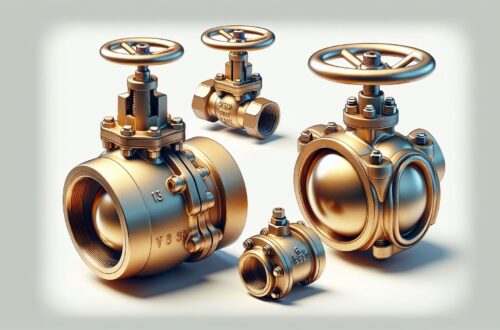
Solenoid Valves: A Primer
In our everyday lives, there are pieces of machinery and systems in place that we rely on, even without realizing it. One of these is solenoid valves. These devices are vital components in the manufacture and operation of countless appliances, machines, and systems we use daily.
In this article, we’re going to dissect what solenoid valves are, how they work, their types, benefits, and potential issues, and ways to troubleshoot them – a comprehensive guide to this fundamental device that controls the flow of fluids in numerous systems.
What is a Solenoid Valve?
A solenoid valve is an electromechanical device used to control the flow of liquids or gases. It uses the principle of electromagnetic attraction and repulsion to open, close or modulate the flow within a valve.
Here’s a more straightforward explanation: A solenoid valve is like a tap but is operated electronically. When a current passes through the solenoid (a coil of wire), it creates an electromagnetic field that can pull a plunger or piston inside the valve, allowing or stopping the fluid flow.
How Do Solenoid Valves Work?
In its simplest form, a solenoid valve consists of two main components: the solenoid (a coil of wire) and the valve body containing the fluid that needs to be controlled.
When the solenoid is energized, it generates a magnetic field that attracts a metallic plunger within it. This action either opens or closes the valve, depending on its design and function. When the electrical power is interrupted, a spring returns the plunger to its original position, thus reverting the valve to its normal state.
Types of Solenoid Valves
Solenoid valves also come in different types classified depending on their operation, construction, and application. Some of the most commonly used ones are:
-
Direct Acting solenoid valves: They function directly through the power of the magnetic field. When the current is applied, the solenoid moves to allow fluid flow.
-
Pilot-operated solenoid valves: This type of valve uses pressure differential to open or close the valve.
-
2-way solenoid valves: This kind has one inlet and one outlet and can stop or allow fluid flow.
-
3-way solenoid valves: They have three port connections and two valve states.
There are many other special types of solenoid valves designed for specific applications, including pressure relief solenoid valves, explosion-proof solenoid valves, and many more.
Benefits and Potential Issues
Solenoid valves offer various benefits, such as fast and safe switching, high reliability, compact size, long-life cycle, and simple control, to name a few. They can also work with many types of fluids and gases, making them versatile components in many systems.
However, like any other mechanical or electrical device, solenoid valves are not free from potential issues. They can fail due to various reasons, including coil burnout, dirt and debris, worn-out seals, improper voltage, and more.
Troubleshooting Solenoid Valves
Understanding the common issues and how to fix them can save time and money:
- If a solenoid valve doesn’t open when energized, check the valve coil because it might have burned out or the applied voltage might be incorrect.
- If it fails to close, inspect the valve for dirt and debris. A stuck plunger could be preventing it from closing.
- Power issues, incorrect voltage, and more could also contribute to some problems.
As always, if the problem seems complex, consult a professional to help troubleshoot and solve it.
Conclusion
Solenoid valves are invaluable components in many systems we take for granted daily. With this extensive knowledge about these devices, one can understand their operation, benefits, and potential issues. Knowing how to troubleshoot them can even help you solve common problems and keep systems running smoothly.
References
- “Solenoid Valves – An Overview”, ScienceDirect. Available: https://www.sciencedirect.com/topics/engineering/solenoid-valve.
- “Different types of solenoid valves”, Tameson UK. Available: https://tameson.co.uk/solenoid-valve-types.html.
- “How to Troubleshoot a Solenoid Valve”, ASCO. Available: https://www.asco.com/en-us/articles/pages/how-to-troubleshoot-a-solenoid-valve.aspx.