The Comprehensive Guide to Ball Valves: Understanding their Importance, Function, and Selection
Let me preface this by setting the fundamentals straight: being familiar with the myriad valves available in the market is prerequisites, be it for industrial applications or domestic utilities. While many might think the subject of valves is a niche; valves, especially ball valves, are widely used across long-range applications and play major roles in maintaining the functionings of multiple systems.
Currently, we will concentrate on ball valves in-depth. This post will explore their definition, purpose, operation, application, and selection criteria. Whether you’re a newbie or seasoned professional in hydraulic systems, this article is designed to inform you pertinent concerns about ball valves.
Defining Ball Valves
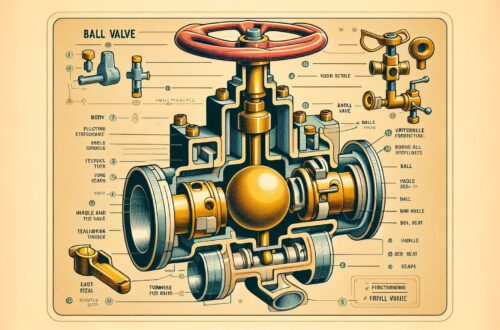
Ball valves are typically quarter-turn, straight-through flow valves that have a rounded closure element and matching rounded seats that permit consistent sealing stress. Ball valves are used in situations that require a tight shut-off mechanism. They function as an on-off control of fluid flow and are durable, reliable, and provide a perfect sealing system when closed [^1^].
Due to their uncomplicated structure and low restoration requirements, they have gained popularity and relevance in different industries. Their inimitable design enables them to function well even after long idle periods, making them an excellent choice for shutoff applications where they are frequently used for isolation purposes in various kinds of systems [^2^].
Operating Mechanism
In the simplest terms, a ball valve prompts an easy start and stop the fluid flow. The valve gets its name from the ball-like disk within the valve, which has a port. When the valve is open, this port aligns in the direction of fluid flow and therefore, fluid passes through it. This, in return, blocks the fluid flow when the valve is closed since the port is perpendicular to the fluid flow [^3^].
The handle of the valve aids in constricting or freeing the flow by rotating the ball-like disk. The rotation is approximately 90 degrees, which is why ball valves are known as quarter-turn valves.
Major Applications of Ball Valves
Sharing their versatility, ball valves are used in a plethora of industries including but not confined to chemical production, food and beverage, pharmaceuticals, petroleum refining, and residential as well as commercial plumbing.
In many industries, they tend to be preferable due to their ability to control high-pressure, high-volume and high-temperature flow. They also exhibit tight sealing with low torque, and easy quarter turn (90-degree rotation) actuation mechanism, thus proving beneficial for both simple household systems or high-demanding industrial setups.
Selecting a Ball Valve
Identifying the proper materials and specifications for your application helps in choosing the most suitable ball valve. Key criteria to consider includes:
- Size: The valve has to coincide with the pipe it is to be fitted. Commonly available valve sizes range from 0.2 to 48 inches.
- End connections: Options include flanged, threaded, socket weld, butt weld, and others.
- Body materials: Brass, bronze, steel, stainless steel, and plastic are typical choices.
- Sealing materials: Choices depend on fluid, temperature, and pressure. Common sealing materials range from PTFE and PVC to metal seals.
- Types: Depending on the use and purpose of inclusion, you can choose from different types of ball valves such as full port, standard port, V-port, trunnion, multiport, etc [^4^].
Always remember, an unsuitable ball valve can trigger an array of issues, impairing the whole system and causing costs that could be avoided by detailing the selection processes.
Conclusion
Determining the right valve for any system, let alone ball valves, is by no means easy but refining your selection process and understanding of their operations, you can efficiently reduce future hindrances, expanding the shelf-life of your system. Read manuals and consult experts when you feel the need to choose the right ball valve for your application.
[^1^]: Valtorc International. “How Do Ball Valves Work.” https://valtorc.com/news/how-does-a-ball-valve-work
[^2^]: Control Valve. “Why do we use a ball valve?” https://control-valve.herose.co.uk/en/control-valve/funktion-control-valve/
[^3^]: PAC Stainless. “How Do Ball Valves Work?” https://pacstainless.com/news-resources/articles/how-does-a-ball-valve-work/
[^4^]: Emerson. ‘’Ball Valves Selection Guide’’ https://www.emerson.com/documents/automation/catalog-isolation-valves-ball-valves-en-3650645.pdf