The Ultimate Guide to Valve Selection
Today, we’re diving into one of the most central components of any fluid-powered system – valves. Whether you’re an engineer, a facility operator, or a field technician, understanding the nuances of valve selection is paramount to ensuring your operations run smoothly and efficiently.
Understanding the Role of Valves
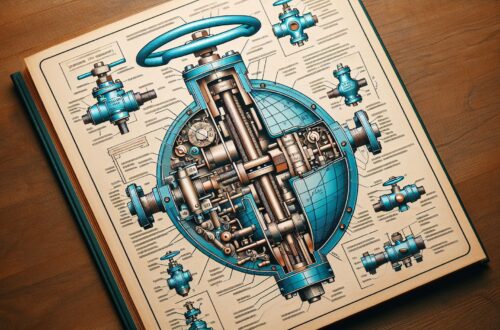
Valves are critical components in virtually any fluid system, designed, primarily, to control the flow rate, pressure, or direction of fluid and gases. They work by opening, closing or partially obstructing some passageways to control the circulation.
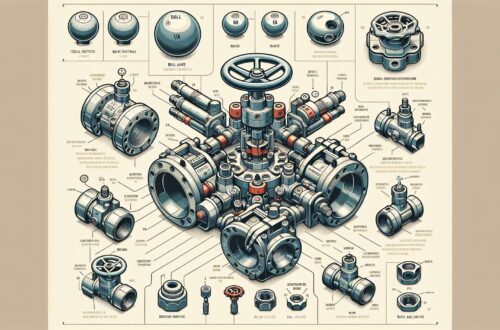
Within simple domestic systems, like house plumbing, you could encounter gate valves, globe valves, or ball valves. However, the scenario changes considerably in industrial applications. In those settings, a more diverse set of valves is required, including but not limited to butterfly valves, check valves, diaphragm valves, knife gate valves, plug valves, and solenoid valves.
Criteria for Valve Selection
Valve selection may seem overwhelming, considering the sheer variety available. However, by focusing on a few key factors, you can significantly narrow down your options.
Valve function
Crucially, one must first identify the valve’s primary function in the system. This usually revolves around three primary areas:
- Stop/Start Function: This refers to the ability of the valve to start or stop the flow of the medium as needed. Gate valves, ball valves, plug valves, and butterfly valves often handle this function.
- Regulation: Includes controlling the flow rate or maintaining a constant flow. Here, globe valves, butterfly valves, needle valves, and pinch valves are common choices.
- Non-Return: Ensuring the medium flows in one direction only. Check valves or non-return valves are the most suitable options in this case.
Type of fluid
The nature of the fluid or gas within the system plays a significant role in selecting a suitable valve. The valve material must be resistant to any corrosive effects the medium may have. Also, different valve types are better suited to certain fluid types. For instance, diaphragm valves and pinch valves are generally preferred for slurries or fluids with high solid content.
Operating conditions
The operating conditions such as operating pressure, temperature range, and flow rate are also critical considerations in valve selection. These factors will influence the choice of valve type, valve material, and the need for any specific features such as pressure relief or vacuum breaker functionality.
Valve Materials
Perhaps one of the most important factors in valve selection is the material used in the valve’s manufacture. Corrosion, erosion, temperature resistance, and cost are all factors linked to the material chosen.
Valve Body Materials: These could include materials such as brass, bronze, carbon steel, stainless steel, alloy steel, iron, or PVC.
Valve Seat Materials: In contrast to the valve body, the seat materials often need to have a certain level of flexibility. Rubber, PTFE (Teflon), nylon, metal, and other plastics are common choices.
Valve Sizing
Proper valve sizing is integral to the valving process to ensure optimal performance. An undersized valve might restrict flow, while an oversized one could lead to unnecessary costs and potential control problems. To accurately size a valve, one has to calculate the flow coefficient (Cv value) and compare it with the valve’s rated Cv value.
Valve Actuation
Another essential factor in valve selection is actuation – the means by which the valve is operated. It could be manual, requiring physical handling, or automated, in which case an actuator is needed. Actuators come in various forms, including electric, pneumatic, hydraulic, or solenoid types.
Maintenance and Lifecycle
Enjoying the full lifecycle of the valve and reducing the maintenance cost is significantly reliant on the selection. It is important to consider valve servicing, the availability of spare parts, and the durability of the valve in specific operating conditions.
Conclusion
The significance of valve selection cannot be overstated. By comprehending the correct selection process, you can improve overall system efficiency, reduce maintenance costs and contribute to safe operation.
References:
- Faisal, I. (2017). Valve Selection Handbook: Engineering Fundamentals for Selecting the Right Valve Design for Every Industrial Flow Application. Gulf Professional Publishing.
- Smith, M., & Zappe, R. W. (2004). Valve Selection Handbook: Engineering Fundamentals for Selecting Manual Valves, Check Valves, Pressure Relief Valves, and Rupture Discs. Gulf Professional Publishing.
- Skousen, P. (2004). Valve Handbook. McGraw Hill Professional.