Understanding Ball Valves: Applications, Materials, and Maintenance Strategies
When discussing fluid control systems, the conversation would be incomplete without mentioning ball valves. They are crucial components that control, regulate, and direct the flow of fluids in a myriad of industries, providing efficient fluid control solutions to various applications.
This article aims to delve into the world of ball valves, examining their uses, the materials they are made of, and the maintenance approaches that keep them up and running.
What Are Ball Valves?
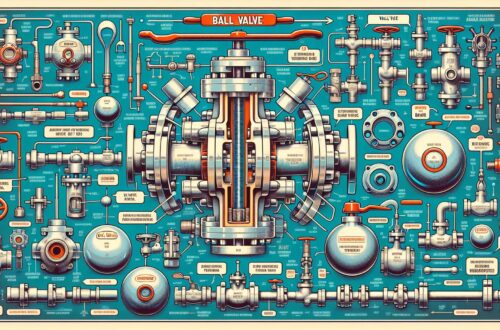
A ball valve is a shut-off valve that controls the flow of a liquid or gas using a rotary ball having a bore. When the valve is open, the bored hole, or port, is in line with the pipeline, allowing flow to occur. When closed, the ball is rotated so that the hole is perpendicular to the flow, blocking it.
Thanks to their sphere-shaped closure unit and ease of operation, ball valves are used in a variety of applications. They are best used for shut-off and control applications where the pressure drop through the valve is a controlling factor and where the valve may need to be regularly closed and opened.
Advantages of Using Ball Valves:
Ball valves offer many benefits, including:
-
Easy operation: With a simple quarter-turn of the valve handle, the pipeline is either open or closed, providing easy operation with little chance of failure.
-
Durability: Ball valves are known for their durability and are capable of maintaining their quality performance after many cycles.
-
Versatility: Ball valves can be used in a wide range of temperatures and pressures. They can handle fluids ranging from air, water, chemical substances, and steam.
Materials of Ball Valves
The material of the ball valves is another essential feature to consider. The material selection usually depends on the type of fluid to be controlled, temperature, pressure and the environment where the valve will be installed.
-
Brass Ball Valves: Brass is one of the most common materials for ball valves. It’s robust and resistant to corrosion, making it suitable for water supply applications.
-
Stainless Steel Ball Valves: These are more durable and offer high resistance to corrosion, making them suitable for heavy-duty applications and acidic environments.
-
PVC Ball Valives: Polyvinyl Chloride (PVC) ball valves are light, resist scaling and corrosion, and are ideal for a variety of applications, including water supply and distribution.
Maintenance Strategies for Ball Valves
Like any other component of a system, ball valves require appropriate maintenance to keep them functioning at their optimal efficiency. Neglected valves result in inefficiencies, leakage, and could lead to system failure.
-
Regular Inspection: Regular examinations help to prevent leakages from valves and to ensure the total integrity and correct functioning of the system.
-
Prompt Repair And Replacement: If a problem is detected during an inspection, the ball valve must be promptly repaired or replaced.
-
Keep It Lubricated: This helps to maintain the functionality of the valve, ensuring that it will operate smoothly even after long periods.
Conclusion
To conclude, ball valves are essential components of fluid control systems. They are used in a wide range of applications due to their reliability, durability, and versatility. Regardless of their construction material – brass, stainless steel, or PVC – each ball valve serves its purpose in the given environment. However, like all mechanical components, they require routine maintenance to ensure optimal performance and longevity.
Sources
1. Ball Valves – Information and Use
2. What is a Ball Valve?
3. Ball Valve Maintenance Strategies