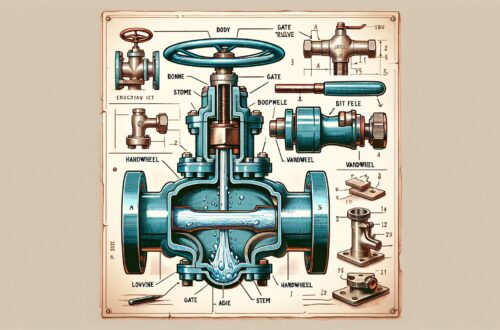
Understanding Valve Sizing: A Comprehensive Guide
Control is an essential feature of any industrial process. One of the key components ensuring this control is a valve. Behind any quality process control, robust and efficient operation lies a well-selected, well-installed, and well-maintained valve. The process that goes into this, however, starts with correct valve sizing.
What Does Valve Sizing Mean?
Valve sizing refers to the procedure of choosing the correct size for a particular application or process in the industry. With numerous types of valves in the market, such as ball valves, butterfly valves, check valves, and many others, each designed to cater to different industrial applications, correct sizing is indeed a critical task. Different valves differ in terms of their design, functionality, and application, hence require different sizing considerations.
Why is Valve Sizing Important?
Improperly sized valves can result in a plethora of problems, including:
- Unresponsive or unstable control
- Premature valve wear and potential failure
- Increased maintenance costs
- Adverse effects on the entire process.
The Basic Principles of Valve Sizing
The size mentioned on a valve does not refer to its physical dimensions, but instead, it denotes the valve’s nominal size, i.e., the internal diameter of the valve passageway. Besides, two imperative parameters come into play when talking about valve sizing:
- Flow coefficient (Cv): This dimensionless value indicates the ability of the valve to pass flow. It is defined as the amount of water at 60°F (in gallons per minute) that will flow through a valve with a pressure drop of one psi.
- Pressure drop (∆P): It indicates the difference in pressure on either side of the valve. Usually measured in psi or bar, pressure drop is crucial since it signifies the force available to allow the fluid to flow
Valve Sizing Procedure
Valve manufacturing companies usually provide the process of determining the size of a given valve. Nonetheless, a typical valve sizing procedure can be broken down into the following steps:
- Identify the type of fluid and its properties (Density, viscosity, etc.)
- Establish the desired flow rate.
- Determine the available upstream and downstream pressure. Calculate the Pressure drop if needed.
- Using the Cv value and other necessary data, estimate the valve size.
- Ensure that the selected valve size confirms with the process piping size.
Considerations While Valve Sizing
Several factors need to be taken into account when sizing a valve. They are:
-
Fluid characteristics: Different fluids have varying densities and viscosities, and these properties can significantly impact the flow rates and pressure, affecting the valve size.
-
Operating conditions: Parameters like pressure, temperature, and flow rate are critical factors that govern the valve sizing.
-
Valve type: Each valve type has its unique characteristics, which significantly influences its size.
-
Safety: The safety factor should be considered during the valve sizing. Over-sizing a valve might seem like a safer bet, but it can lead to valve damage and reduced control.
Conclusion
Choosing the correct valve size plays a pivotal role in ensuring the smooth operation of any industrial process. It makes the difference between efficient and unsustainable control, minimal and incessant maintenance, and the successful performance of all operations. Having a comprehensive understanding of valve sizing concepts can help in making an informed choice, guaranteeing the long-term success of a process or application.
Sources:
- Valve World (https://www.valveworldexpo.com)
- PumpScout (https://www.pumpscout.com)
- Control Valve Handbook by Emerson (https://www.emerson.com/documents/automation/control-valve-handbook-en-3661203.pdf)