Gate Valves: Your Essential Guide
Valves are an essential component of any piping system, allowing control over the flow of fluids and gases. Although there are countless different types of valves for pretty much any conceivable application, today we’re focusing on a particular type: gate valves.
What is a Gate Valve?
A gate valve is a type of valve that uses a gate or wedge to stop or start the flow of fluid in a system. It’s a common choice for various applications due to its simplicity, reliability, and the ability to cut off fluid flow completely.
How Does it Work?
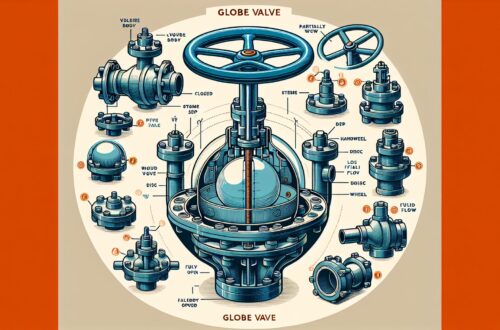
The working principle of a gate valve is quite straightforward: a gate or wedge moves up and down, parallel to the flow of the fluid, to either close (stop) or open (allow) the flow. When the valve is fully open, there’s no obstruction in the flow path, allowing for minimal pressure loss.
Applications of Gate Valves
Gate valves are found in a wide range of sectors, from oil & gas to water treatment, power generation, and chemical manufacturing. These valves are particularly useful where a straight-line flow of fluid and minimum restriction is needed.
Selecting the Right Gate Valve
Choosing the right gate valve for your needs is imperative for an efficient and safe system. Here are a few standard selection criteria to consider:
-
Valve size: Your valve’s size should be proportional to your pipe’s diameter. This ensures optimal performance and minimizes leakage chances.
-
Material: The material of your gate valve is significant as it should withstand the fluid characteristics and the environmental conditions.
-
Operation: Depending on your application, you might require either a manual or actuated gate valve.
-
End Connection: This refers to how the valve connects to the pipe. Some common types include threaded, flanged, and welded connections.
How to Install a Gate Valve
While it’s always recommended to rely on a professional plumber for valve installation, if you feel confident, here’s a basic guide:
- Measure and mark the location where the valve will be installed.
- Turn off the water at the main and drain the system.
- Cut the pipe at your marks.
- Install your valve with the flow arrow in the correct direction.
- Secure the valve in place.
- Check for leaks.
- Turn the water back on.
Maintaining Your Gate Valve
Regular maintenance can ensure the efficient operation of your gate valve and prolong its lifespan. Some key maintenance tips include:
- Regular inspection for leaks.
- Periodically exercise the valve.
- Lubrication of the moving parts.
- Replacement of worn or damaged parts.
In conclusion, gate valves are versatile and robust, find wide-ranging use in many industries. But like any other piece of equipment, understanding its function, selection, installation, and maintenance is vital to ensure optimal performance and long-lasting service.
References:
1. “Ball and Gate Valve Fundamentals and Standards”, from Valve Magazine
2. “Selection and Installation of Valves”, from CED Engineering