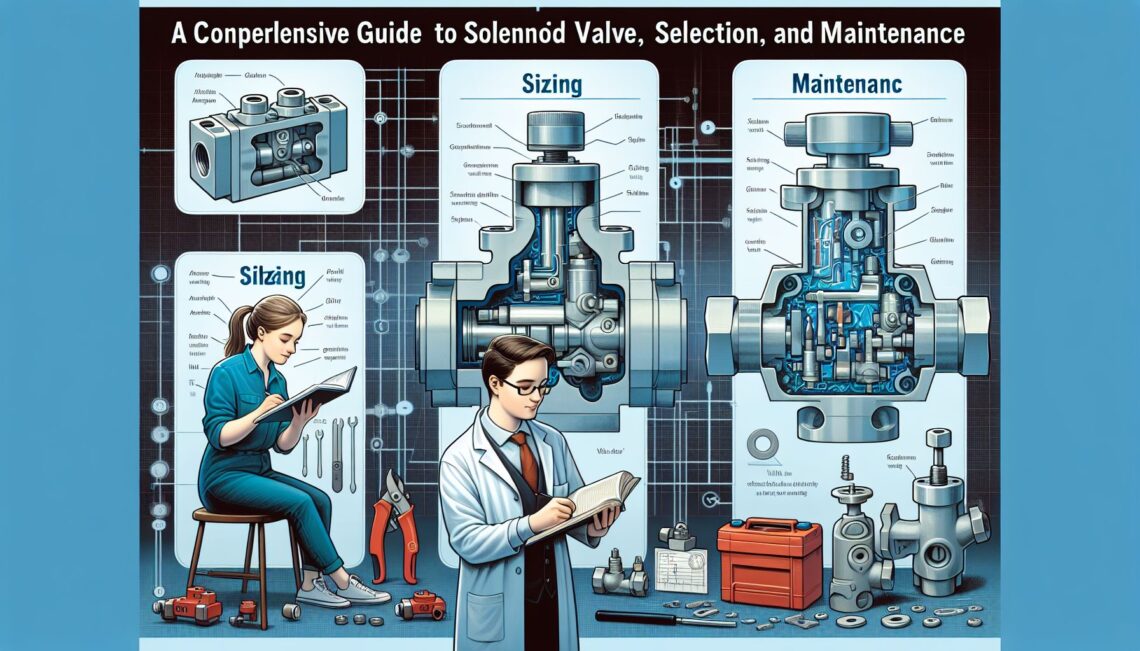
A Comprehensive Guide to Solenoid Valves: Sizing, Selection, and Maintenance
Solenoid valves, part of the broader family of valves, are a frequent mainstay in many industrial systems. The purpose of this guide is to provide a comprehensive understanding of solenoid valves, from sizing and selection to installation, maintenance, and repair.
What are Solenoid Valves?
Solenoid valves are electro-mechanical devices that are commonly used to control the flow of gas or liquid in a system. They work by using a solenoid to open or close the valve, either allowing flow or preventing it. These valves are revered for their power, reliability, and fast acting nature.^[1]
Solenoid Valve Sizing
Choosing the right size of a solenoid valve is vital to the overall performance of a system. It ensures efficiency, prevents leakage or damage to the valve, and provides accurate control. The size of a solenoid valve is governed by two key aspects: the port size and the orifice size.
The port size, referring to the inlet and outlet with which the valve connects to the pipeline, should correspond with the size of the pipeline. The orifice size determines the flow rate of the liquid or gas entering the valve.
Solenoid Valve Selection
Choosing the correct solenoid valve involves considering a variety of factors, including:
– Medium: The type of media that will be flowing through the valve.
– Pressure: The pressure range under which the system operates.
– Temperature: The temperature of the medium and the surroundings.
– Flow: The required flow of the medium.
– Function: Direct acting, pilot operated, semi-direct acting.
– Material: The material of the valve body and seal ought to be compatible with the media.^[2]
Solenoid Valve Installation
Proper installation of a solenoid valve is vital for its optimal operation. It should be installed upright with the coil on top for gravity-assisted closure. Furthermore, checking the specifications of the valve is key to avoid damage when connecting the valve to electrical power.
Solenoid Valve Maintenance and Repair
Regular maintenance can help extend the life of the solenoid valve and ensure it performs optimally. Steps for maintenance include regular cleaning, checking and confirming that the specifications are still accurate, and timely replacement of worn-out parts. Leakage or uneven operation may require repair or replacement of the valve.^[3]
Conclusion: Why Solenoid Valves Matter
Solenoid valves play a crucial role in controlling the flow of gases or liquids in an automated system. Understanding these valves—from sizing and selection to installation and maintenance—is key to keeping systems running efficiently. Properly managed, a solenoid valve can significantly contribute to the streamlined and efficient functioning of an industrial system.
References
[1] ASCO. (n.d.). Solenoid Valves. Retrieved from https://www.asco.com/en-us/Pages/solenoid-valves.aspx
[2] Bürkert. (n.d). Select and size a solenoid valve the right way. Retrieved from https://www.buerkert.de/en/Products-and-applications-custom-solutions/Custom-solutions/Select-and-size-a-solenoid-valve-the-right-way
[3] Industrial Controls. (n.d). Valve maintenance and repair. Retrieved from https://www.industrialcontrolsonline.com/training/online/valves-actuators-regulators/valve-maintenance-and-repair