Understanding Gate Valves: Their Importance, Function, and Advantage
Among the multitude of valves used in various industries, gate valves, also known as sluice valves, have established an integral position due to their efficiency in controlling liquid flow. In this article, we delve deep into understanding gate valves – their function, importance, advantages, and much more.
What is a Gate Valve?
A gate valve is a type of valve that is designed to completely stop or allow full flow of fluids in a pipeline. It achieves this with a gate or wedge that moves perpendicularly to the path of the fluid. This perpendicular movement allows the valve to provide virtually no resistance to fluid flow when fully open, thereby minimizing pressure loss[^1^].
Importance of Gate Valves
Gate valves are crucial in applications where a straight-line fluid flow and minimum flow restriction are necessary. These valves hold importance in industries such as petroleum, manufacturing, pharmaceuticals and sewage treatment due to their reliability in managing flow control, particularly where minimum pressure loss is required.
In addition to the industrial application, gate valves also play significant roles in everyday applications, like in household plumbing systems to manage the flow of tap water.
Functioning of Gate Valves
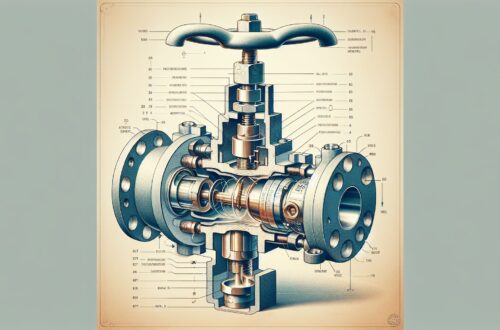
Understanding the anatomy and functionality of gate valves is critical in utilizing their advantages. A typical gate valve is made up of several components, including the body, bonnet, gate or wedge, stem, and handwheel[^2^].
The stem is connected to the gate or wedge. When the handwheel is turned, it moves the stem and the connected gate. Turning the handwheel clockwise raises the gate, stopping fluid flow, while turning the handwheel counterclockwise lowers the gate, opening up the fluid path. This allows the gate valve to act as a stopper or an opener for fluid flow.
Advantages of Gate Valves
There are several distinct advantages that gate valves offer over other types of valves. Let’s take a look at a few:
-
Straight-Line Fluid Flow: One of the significant advantages that gate valves provide is linear, unobstructed fluid flow, resulting in minimal pressure loss. Thus, they are suitable for applications that require minimal turbulence and pressure drop.
-
Minimal Leakage: When fully closed, the gate valves provide a tight seal, ensuring minimal leakage. Hence, they are beneficial in scenarios where tight sealing is required.
-
Low Cost: Gate valves are generally cheaper than other valve types of similar sizes and ratings. This makes them a preferred choice for budget-constrained projects.
-
Low Maintenance: Gate valves require less maintenance and can work efficiently for a long time without needing frequent repairs.
Conclusion
Underlying the ubiquitous presence of gate valves is their versatile effectiveness in managing flow control in a wide range of applications. From potable water systems to hazardous chemical processing plants, gate valves prove their relevance and importance time and again. Whether it is about achieving straight-line fluid flow with minimal pressure loss, ensuring minimal leakage, or economizing with less costly and low maintenance valves, gate valves are an overarching solution.
[^1^]: Source: Machine Design – Exploring the Basics of Gate Valves
[^2^]: Source: Piping Guide – Introduction to Gate Valves