Essential Guide to Gate Valves: Function, Types, and Maintenance
Gate valves, as with any technology, are a crucial yet often overlooked component in industries that deal with fluid conveyance. They control the flow and act as a shut-off mechanism in piping systems. This article will delve into the crucial aspects of gate valves, encompassing their function, types, and maintenance.
What are Gate Valves?
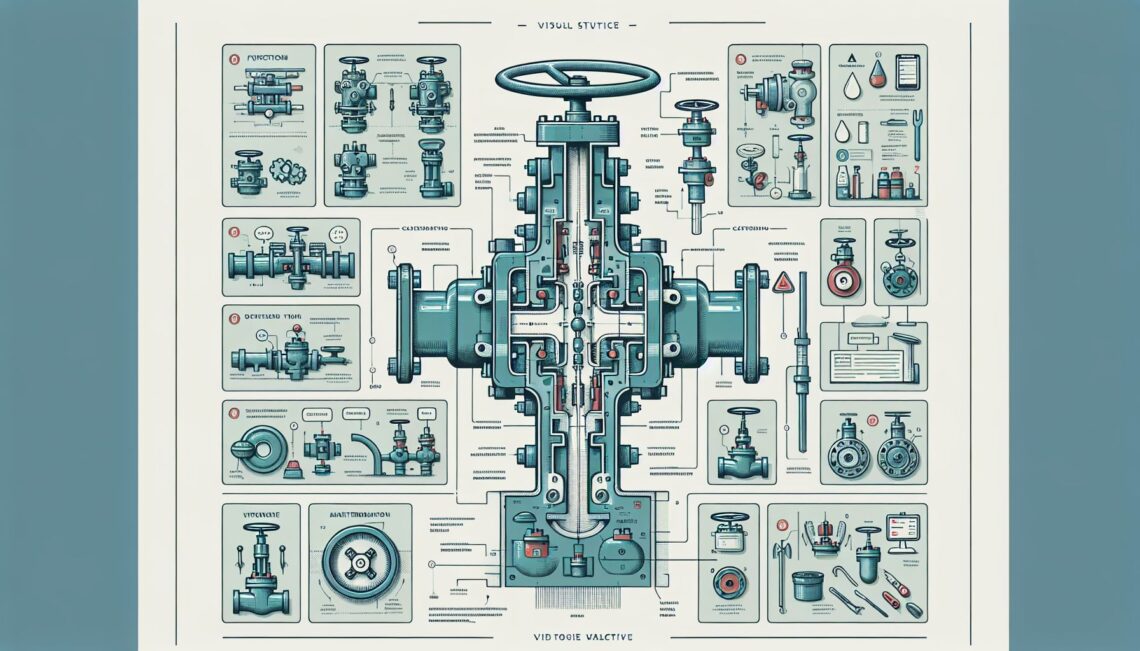
Gate valves, also known as sluice valves, are primarily designed to start or stop the flow of liquid where a straight-line flow of fluid and minimum flow restriction is needed. They work by lowering a rectangular or circular gate, which halts the flow of the fluid.
When the valve’s wheel is turned, it raises or lowers the gate to either block or create an opening for the fluid. The gate is so designed that it entirely prevents the fluid from passing through when the valve is closed and offers minimal resistance when open1^(1).
Types of Gate Valves
Solid Wedge Gate Valve
The most common type of gate valve, characterized by its simplicity and robustness. The solid wedge is a single-piece, fully-guided solid gate. It is ideal for almost all applications, especially turbulent flow.
Flexible Wedge Gate Valve
Designed to reduce the effects of body/bonnet deflection or pipe stresses on the valve seating. The gate is a one-piece flexible disc that can flex to distribute the seating stress more evenly.
Split Wedge Gate Valve
This type handles thermal expansions or contractions and has a “self-aligning” two-piece wedge. It is suitable for handling hot oil under high pressure.
There’s no doubt that choosing the right gate valve type for your industry is critical. Each type has unique traits that could impact your process either positively or negatively if not considered^(2).
Gate Valve Maintenance
While gate valves are known for their durability, proper and regular maintenance is necessary to ensure they function efficiently and prolong their service life. Here are the steps to maintain them.
Regular Inspection
Regular and thorough inspection can identify potential problems such as leaks, cracks, or loose components in the valve’s body. These issues, if detected and fixed early, can prevent costly repairs or replacements down the line.
Lubrication
Regular lubrication eases the operation of the valve. However, one must use suitable lubricant types that won’t affect the valve’s functions or harm the fluid passing through.
Replacing Worn Leaves
The seals or packing can become worn over time due to constant pressure and flow of fluid. If these are not replaced, it can lead to leaks and inefficient operation.
Professional Maintenance
Some maintenance measures, such as replacing the body or internal valves, may require professional help. Involve experts for complicated issues to ensure the components are fitted correctly and avoid further damage.
Gate valves have become the go-to solution due to their unlimited advantages and applications in several industries. However, their efficient operation heavily depends on regular and proper maintenance practices. Choosing the right type of gate valve is also pivotal for achieving optimal results^(3).
References