An Ultimate Guide to Valve Selection
Selecting the most appropriate valve—the control component in fluid delivery systems—is a pivotal task. As the heart of many industrial processes, an optimally selected valve ensures safe and efficient operation. This comprehensive guide provides fundamental insights into valve selection based on their numerous kinds, functions, and various application requirements.
Introduction
Choosing the correct valve involves many parameters, including the type of fluid, application, temperature, pressure, and cost. Understanding the key characteristics of different valve types and the factors influencing their selection is vitally important for engineers and designers. Here’s everything you need to know about valve selection.
Types of Valves and Their Functions
Firstly, it’s key to understand the principal kinds of valves and their functions:
-
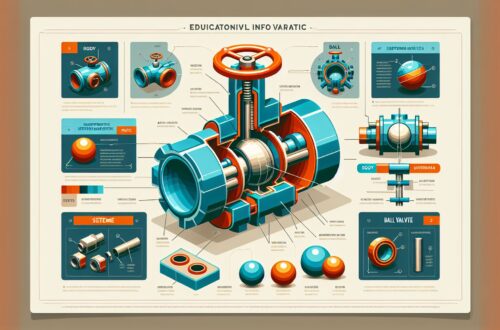
Ball Valves: Handy for on-off applications, ball valves provide a reliable seal and are suitable for high-temperature and high-pressure environments due to their robust design.
-
Butterfly Valves: These valves control flow by rotating a disk positioned in the center of the pipe. Butterfly valves are known for their simple design, compact size, and low-cost.
-
Gate Valves: Used mainly as an isolation valve in applications requiring full-flow with minimal pressure drop.
-
Check Valves: Check valves have an important role in preventing fluid backflow.
-
Pinch Valves: These are ideal for handling slurries, abrasives, and corrosive chemicals, thanks to their elastomeric body that can easily pinch to shut off flow.
The choice between these types depends mostly on the application, cost, and frequency of operation.
Key Factors to Consider
There are several essential factors to take into consideration during valve selection.
-
Application: Different processes require varying degrees of flow control and isolation. For example, a Butterfly valve is suitable for basic flow control, while Ball or Gate valves perform well in applications requiring tight shutoff.
-
Valve Size: The valve should correspond to the size of the pipe it will be installed in to maintain the necessary flow rates.
-
Pressure & Temperature: The valve’s material should withstand the maximum system pressure and temperature.
-
Valve Materials: The product flowing through the valve could affect its material. For instance, stainless steel is suitable for most fluids, but Brass would better suit potable water.
-
Installation & Maintenance: Some valves are easier to install and maintain than others. These factors will directly influence total project costs.
-
Cost: This factor encompasses not only the price tag of the valve but also its operating, maintenance, and replacement costs.
Conclusion
The selection of the right valve is a crucial decision that impacts the safety and efficiency of any fluid handling system. This guide underlines the importance of proper valve selection, taking into consideration the main types, their functions, and the most pertinent selection criteria.
Sources:
- Valve Magazine. (2022). Understanding valve design and material selection. [online] Available at: Valve Magazine
- Engineers Edge. (2022). Valve pressure drop calculation. [online] Available at: Engineers Edge
- U.S. Department of Energy. (2022). Improving pump efficiency. [online] Available at: Energy.gov