Comprehensive Guide to Ball Valves
Ball valves are an integral unit of numerous industries where they serve the purpose of controlling the flow of liquids and gases under various pressure rates. They are immensely prominent due to their durability, efficiency, cost-effectiveness, and susceptibility to perform for an extended period, even after prolonged downtime. This article presents a comprehensive view on ball valves, highlighting their types, operation, selection criteria, installation, maintenance, and common issues.
Understanding Ball Valves
A ball valve is a form of quarter-turn valve which deploys a hollow, pivoting ball to manage the flow through it (Encyclopedia Britannica). It is significantly versatile and can provide secure shutoff even after numerous years of disuse, rendering it an excellent choice for shutoff applications. It plays a significant role in applications including but not limited to water and sewage treatment, chemical and petrochemical industry, food and beverage industry, pharmaceutical industry, and power industry.
Types of Ball Valves
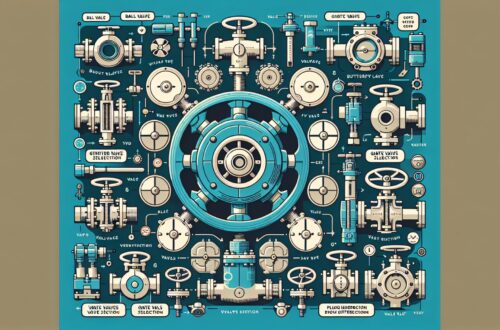
Ball valves come in a variety of styles that cater to different needs (Engineering Toolbox).
- Full Port Ball Valves: These have an oversized ball, enabling a hole within the ball to be of the same size as the pipeline, resulting in lower friction loss.
- Reduced Port Ball Valves: Also known as ‘Standard Port,’ these have a smaller ball and a correspondingly smaller port. Flow through this valve is one pipe size smaller than the valve’s pipe size.
- V-port Ball Valves: These types have a ‘v’ shaped ball or seat. This design allows for more precise flow control and regulation.
- Cavity Filler Ball Valves: Appropriate for industries where the medium can get lodged or get trapped in the valve.
- Three-way Ball Valves: These come with three ports. They are available in two types, ‘L-Port’ and ‘T-Port.’
How Does a Ball Valve Work?
A ball valve works using a rotary action with a closure member which is either a full- or reduced-bore sphere with a flow path or hole generally through the center. By rotating the ball around 90 degrees, the flow can be turned fully-on, fully-off, or anywhere in between. This simplicity of operation hence makes the ball valve supremely handy for both regulating and throttling services.
Selecting the Correct Ball Valve
For a durable and reliable pipeline, it is crucial to select a suitable ball valve considering the following (Gregory Shaver, Milwaukee Journal Sentinel):
- Pressure: Ball valves must be equipped to handle pressure without failure or leakage.
- Size: Opt for a size that aligns perfectly with pipeline specifications. Misaligned sizes can lead to leaks and inefficiencies.
- Temperature: Ensure the selected valve can endure the temperatures it will be exposed to.
- Material: The material of the valve must be compatible with the substance it will control to avoid corrosion.
- End Connection: The valve should be compatible with the pipeline’s end connection type – flanged, threaded, or welded.
Installation and Maintenance
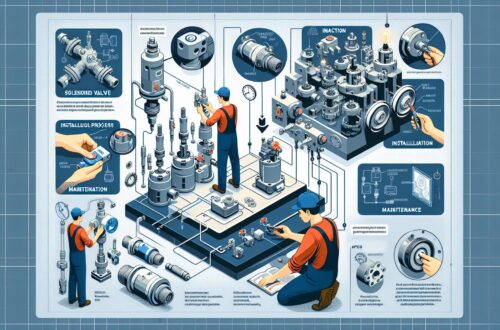
Proper installation and regular maintenance are essential for ball valve longevity and optimal operation. Below are general steps for installation:
- Carefully clean the inner and outer surfaces of the ball valve and the pipes.
- Align the valve with the pipe and secure it.
- Verify the valve’s functionality by opening and closing it.
- Check for leaks around the joints after initiating the flow.
Routine maintenance includes regularly checking for wear and tear, cleaning and lubricating moving parts, and replacing damaged components as needed.
Common Ball Valve Issues
While ball valves are typically low-maintenance, issues may occur over time. Some common problems include:
- Leaks: Usually a consequence of a broken seal or an issue with the valve’s joints or connections.
- Blockage: Debris can sometimes cause blockages, affecting the valve’s operation.
- Wear and Tear: Over time, the valve’s components can naturally deteriorate, affecting functionality.
In most cases, regular maintenance can prevent these issues from escalating into serious problems.
Conclusion
As a key component in myriad industrial applications, ball valves play a crucial role in controlling the flow of various substances through pipelines. Despite their impressive robustness and versatility, correct selection, installation, and maintenance are necessary to optimize their performance and lifespan. By gaining a comprehensive understanding of ball valves, operators can ensure long-lasting, efficient, and reliable valve operation.
Sources