Gate Valves: Unraveling Its Functions, Types, and Applications
Gate valves, known for their simple design and sufficing the critical needs, play a prominent role in the arena of industrial fluid systems and applications. These valves essentially serve the purpose of completely halting or allowing the flow of liquids in a pipeline, and are often found in both basic household plumbing systems and large-scale industrial frameworks. Due to the precision and effectiveness in managing fluid flow, gate valves have become an indispensable part of countless establishments worldwide.
In this article, we delve deep into the functions, types and applications of gate valves, understanding why they are such essential tools.
Functions of Gate Valves
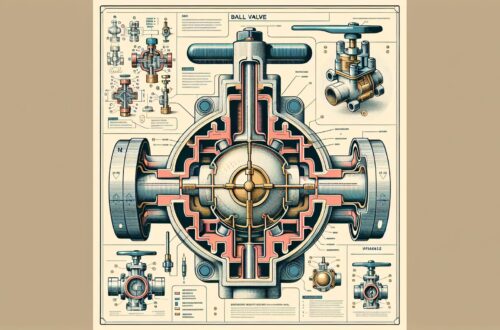
Primarily, gate valves are used as shut-off valves, allowing for the total blockage or allowance of fluid flow. Unlike other types of valves that regulate flow, gate valves operate in a binary format: it’s either completely open or completely shut. The key components of a gate valve include body, bonnet, trim, disc, seat, stem, packing, actuator, and others[^1^]. It’s structured in a way that when the valve is fully opened the gate vanishes into the bonnet, causing minuscule to no drop in pressure.
Types of Gate Valves
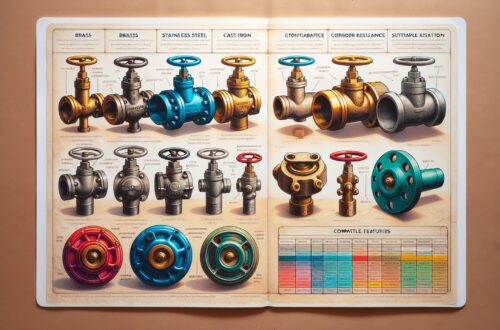
Gate valves variety is defined by the design of the disc that travels perpendicular to the flow. There are mainly three types of gate valves: wedge-shaped, parallel disk, and knife.
-
Wedge Shaped Gate Valves: The most common type of gate valves, their disc is in the shape of a wedge which fits into a matching seat. This design makes it an ideal choice for both low and high-pressure applications.
-
Parallel Disk Gate Valves: This versions is equipped with a disc that is not inclined but parallel to the seating. With two discs spread apart at a safe distance instead of one, this variant is suitable for handling larger pressure variances or vacuum conditions[^3^].
-
Knife Gate Valves: As the name suggests, they have a sharp edge to cut through any thick, viscous fluid or solid-filled media. They are ideal for the pulp and paper, mining, wastewater treatment, and chemical industries where heavy sediments are mixed in the liquid[^2^].
Key Industrial Applications of Gate Valves
Gate valves are primarily used in systems where flow needs to be completely shut down. Some of the common applications are:
-
Plumbing: Gate valves are quite prevalent in household items, most typically in water systems where a pipe’s fluid flow requires to be stopped for maintenance or repair.
-
Oil Industry: Due to their ability to handle thick liquids, gate valves are increasingly used in oil refineries.
-
Power Plants: Power plants often utilize high pressure and high-temperature steam for their processes. Gate valves are often implemented due to their capability to handle extreme pressure.
-
Water and Sewage Treatment: Due to the presence of solid materials, knife gate valves find extensive application in wastewater treatment plants.
Gate valves are the foundation of countless systems across the globe. Deeply understanding how they work, their types, and their specific applications is pivotal if you are involved in fields like plumbing, wastewater treatment, or oil sector. Remember, each system has unique needs that might require a specific type of valve, and gate valve could be that vital part that would efficiently facilitate your system functionality.
^1^: Introduction to Gate Valves
^2^: Comparison of Different Gate Types
^3^: Overview of Gate Valves